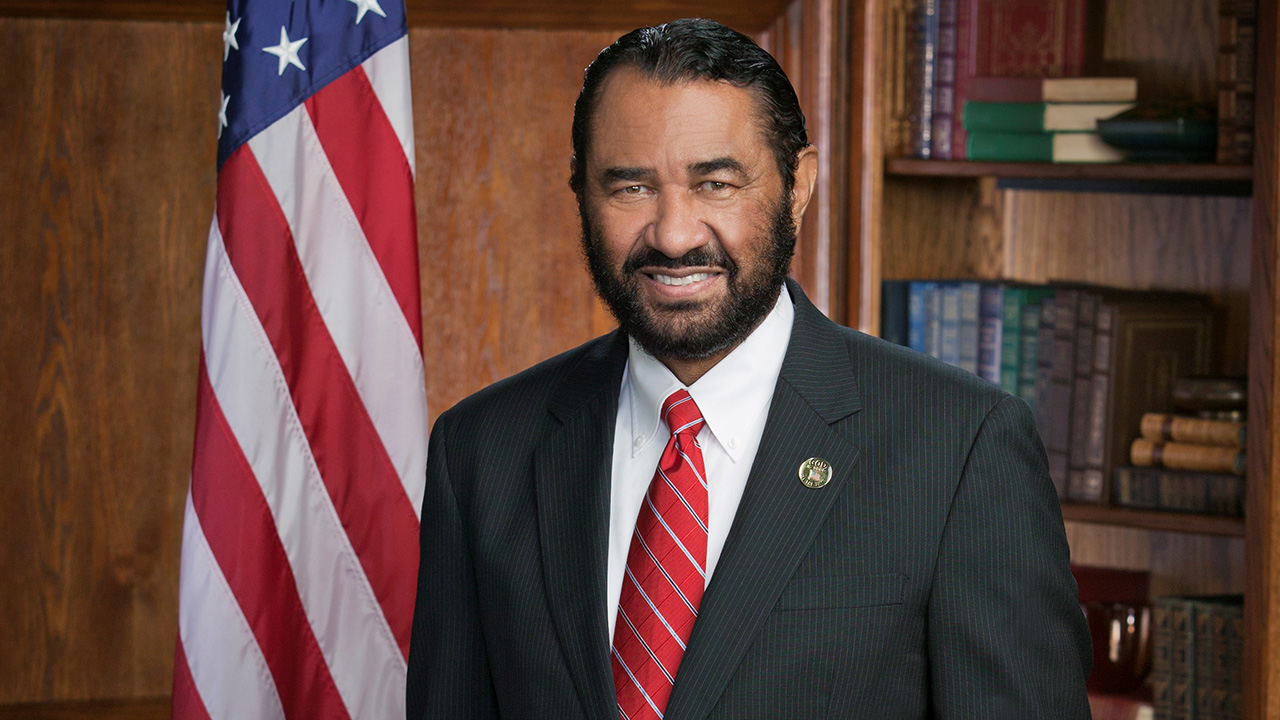

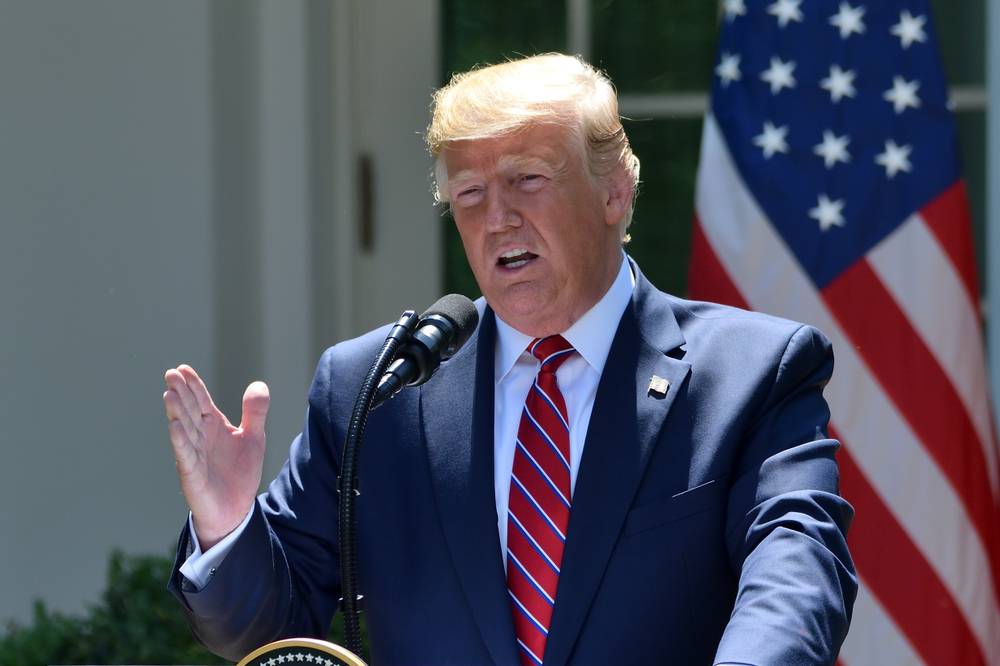
When President Donald Trump exited Madison Square Garden on the night of June 9, 2026, the New York Knicks had just lost Game 3 of the NBA Finals to the San Antonio Spurs. Trump had been heavily booed when he appeared on the arena’s screens during the national anthem. His response, delivered to reporters near Air Force One, was not a reflection on the game, on the city he grew up in, or on what it meant for the Knicks’ championship hopes. It was something else entirely – something a number of journalists, linguists, and now members of Congress have been tracking with increasing urgency.
“You need a certain aptitude to run for president – you need a high IQ,” Trump told reporters, directing his comments at ESPN commentator Stephen A. Smith. “I’m not sure he has that. I don’t think he does, actually.” Smith’s offense? He had predicted, correctly, that the Knicks would lose their NBA Finals game at Madison Square Garden against the San Antonio Spurs once Trump arrived courtside. The prediction came true. The insult followed on cue.
What happened next went beyond a sports feud. Reporting by HuffPost on the documented pattern behind Trump’s “low IQ” rhetoric reached the floor of the United States House of Representatives, where Rep. Al Green of Texas read it into the congressional record – turning a recurring presidential insult into an official matter of legislative concern. The record now contains not just what Trump said on June 9, but what he has been saying for years, to whom, and what linguists and historians say those words actually mean.
The Spark: Trump, Stephen A. Smith, and the NBA Finals
On June 9, 2026, Trump attended Game 3 of the NBA Finals between the New York Knicks and the San Antonio Spurs at Madison Square Garden, an appearance that locked down Midtown Manhattan and drew audible boos when he was shown on the arena screens. Smith had initially said Trump’s attendance would be a detriment to NBA fans and the city. The Spurs won, 115-111. To cope with the rejection from the hometown crowd, Trump reached for a well-practiced line of attack: calling a Black person dumb.
On Truth Social the following day, Trump called Smith an “arrogant fool” and “low IQ individual.” Smith responded on “First Take,” challenging Trump to a debate and saying he would put his IQ up against Trump’s “any day of the week,” while calling out the president for appearing to fall asleep at the game.
Trump also claimed, falsely, that the boos heard in the Garden were “mostly cheers.” The Secret Service had set up a hard perimeter around the arena; fans were forced to wait in line for hours to pass through advanced screenings, and public watch parties were forced to relocate away from their usual spaces near the arena.
The exchange made headlines as a celebrity spat. It was also something more: the latest installment in a long, documented record of a sitting president deploying a specific insult against a specific demographic.
The Pattern: “Low IQ” as a Presidential Weapon
The insult is not occasional. It is not impulsive. It is a pattern. According to a review of Trump’s Truth Social posts conducted by Mother Jones, the president used the phrase “low IQ” at least 50 times between 2022 and April 2026. Sixty percent of those uses were directed at Black or brown individuals. A separate analysis by Truthout – examining only posts from Trump’s current presidential term, January 20, 2025 through April 25, 2026 – found an even starker ratio. Examining every Truth Social post by Trump that included the term “IQ” during that period, Truthout found that Trump used “low IQ” or a variation of it in 24 posts. He referred to a white person as “low IQ” in just 32 percent of those posts, while 84 percent were directed at Black or brown people.
The list of targets is long and consistent. Trump has called Supreme Court Justice Ketanji Brown Jackson “a low-IQ person.” In a May 1, 2026 social media post, he described House Minority Leader Hakeem Jeffries as a “Low IQ Democrat” and a “THUG.” Speaking about Rep. Jasmine Crockett of Texas, Trump said, “This is a low IQ person who I can’t even believe is a congressperson.” And during the 2024 campaign, Trump repeatedly called then-Vice President Kamala Harris “low IQ” and “dumb,” claiming she lacked the “mental capacity” to debate him.
At the 2026 White House Easter Egg Roll – an event attended by families with young children – Trump described Harris as “a low IQ person” and posed the question, in front of the assembled crowd, of whether Biden or Harris had the lower IQ. The remark was confirmed by Snopes.
Trump also described New York Attorney General Letitia James, who prevailed against him in court in February 2024, as having “a big, nasty, and ugly mouth” and as “a Low IQ individual.” He called Rep. Maxine Waters “an extraordinarily low IQ person” as far back as 2018.
When Jackson – a double Harvard graduate and the first Black woman on the Supreme Court – was attacked by Trump as “that new, Low IQ person, that somehow found her way to the bench,” he had already similarly assailed ethnic minority Democratic lawmakers including Jasmine Crockett, Alexandria Ocasio-Cortez, Al Green, Rashida Tlaib, and Maxine Waters.
White Targets: The Exceptions That Define the Rule
Trump has also deployed the insult against white politicians, including former President Joe Biden and California Governor Gavin Newsom. His targets are most often people of color, but the insult is not exclusively reserved for them. When Tucker Carlson raised alarms about nuclear war with Iran in April 2026, Trump told the New York Post that Carlson was “a low IQ person who has absolutely no idea what’s going on,” then followed that with a lengthy rant on Truth Social.
The selective extension of the insult to white critics appears, in the eyes of many analysts, to function as cover rather than evidence of neutrality. Communications experts say that Trump overwhelmingly uses the term to target nonwhite people, and that the phrase functions as a racist dog whistle to members of his political base.
What Linguists Say: “Low IQ” Is Not Just an Insult

The choice of language is not incidental. Linguists who have examined Trump’s use of intelligence-based insults point to a specific and troubling history that gives the phrase its particular charge when deployed against Black people.
Carrie Gillon, a linguist and co-host of Vocal Fries, a podcast about linguistic discrimination, has said that Trump’s markedly different way of speaking about Black people’s intelligence “reeks of racism.” Gillon stated: “It’s absolutely evident that he thinks Black people have lower IQs than white people.” She added that “the history of IQ is racist and eugenicist” and that “talking about IQ, particularly in this way, is racist.”
Megan Figueroa, a linguist and co-host of the same podcast, said Trump “believes that Black people can have so-called good genes when it comes to sports, but otherwise are ‘low-IQ individuals.’ It’s just blatant racism.”
Those assessments draw on a history of IQ measurement that is rarely examined in news cycle coverage but is well established in academic literature. When it was first developed, the Intelligence Quotient was devised as a statistical tool used to implement eugenic programs – not as a neutral measure of cognition. Alfred Binet invented the IQ test in France specifically to identify struggling students who needed extra support, recognizing from its conception that intelligence had substantial environmental influence and was malleable rather than fixed. The American adaptation of that tool, however, took a different direction.
In the early 20th century, Lewis Terman and his colleagues at Stanford University developed the Stanford-Binet IQ test, which adapted Binet’s original work. IQ tests began to be administered in large numbers during the second decade of the 20th century – in service of immigration restriction, racial segregation, and forced sterilization programs. The notion of the “intelligence quotient” became one of the foundational intellectual props of the eugenics movement, and IQ testing was employed as an argument to propose, project, and enforce racist social policies.
The scientific consensus today is that genetics does not explain differences in IQ test performance between racial groups, and that observed differences are environmental in origin. Pseudoscientific claims of inherent differences in intelligence between races have played a central role in the history of scientific racism. Invoking IQ as a marker of racial fitness – consciously or not – does not occur in a historical vacuum.
Rep. Al Green and the Congressional Record
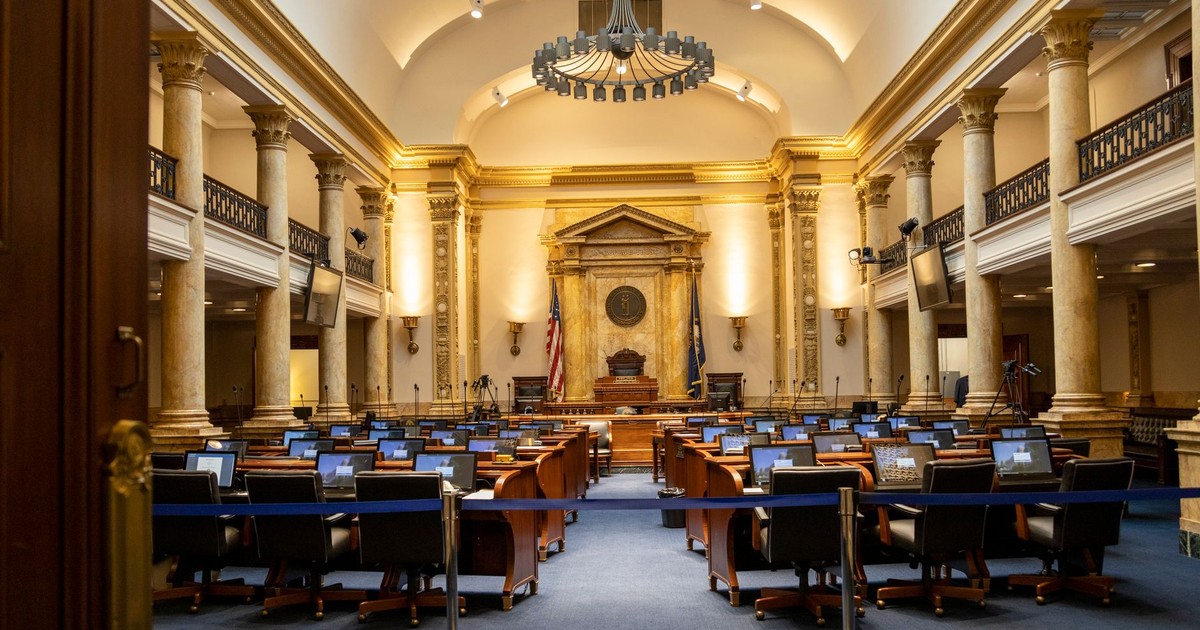
HuffPost has repeatedly reported on dangerous patterns in President Donald Trump’s rhetoric, and when Rep. Al Green of Texas took that reporting to the House floor to call out Trump’s racist weaponization of language, it crossed from journalism into the permanent legislative record.
Green has a well-documented history of direct confrontation with Trump. The longtime Texas progressive was removed by security in 2025 during Trump’s address to a joint session of Congress after repeatedly interrupting the president by shouting and shaking his cane. The House voted to censure Green over the outburst, with 10 Democrats joining Republicans in the move. At Trump’s 2026 State of the Union address, as Trump arrived, Green held up a sign reading in all capital letters, “Black people aren’t apes!” – and was escorted out after refusing to lower it.
On September 11, 2025, Green delivered remarks on the House floor decrying hate of all forms and explicitly rejecting the notion that exposing racism fosters violence. Green’s floor speeches are part of a sustained effort, not a single reaction. He has been one of Trump’s most vocal critics among House Democrats, pushing impeachment articles against him on multiple occasions.
Between January 2025 and April 2026, Trump used the phrase “low IQ” or a variation of it 24 times on Truth Social – a figure that Green cited on the House floor as part of the documented case for calling the rhetoric what experts say it is.
When lawmakers like Rep. Green read investigations aloud on the House floor, it means that reporting does not just shadow the news cycle – it becomes part of the congressional record. Statements entered into the congressional record carry constitutional protection and permanent archival status. They cannot be deleted from a social media platform or overshadowed by the next day’s news.
A Broader Rhetorical Pattern: Targets Beyond Black Americans

The full scope of when and how Trump deploys intelligence-based attacks is revealing precisely where it holds and where it breaks.
After Reps. Ilhan Omar and Rashida Tlaib heckled Trump during his State of the Union address, he posted: “Low IQ Ilhan Omar and Rashida Tlaib … screamed uncontrollably last night at the very elegant State of the Union.” In October 2025, after taking a cognitive test, he said of Rep. Alexandria Ocasio-Cortez, “AOC is low IQ” and said she should be made to take “the exams that I decided to take when I was at Walter Reed.”
The targets span Black lawmakers, a Somali-American congresswoman, a Palestinian-American congresswoman, a Puerto Rican congresswoman, a Black woman Supreme Court justice, and a Black ESPN commentator who had the temerity to predict a basketball outcome correctly. When white political enemies like Tucker Carlson or Marjorie Taylor Greene draw the same label, it tends to arrive in the context of perceived betrayal – former allies who crossed him. The structural distinction between those deployments and the ones directed at Black and brown public figures is not subtle.
Trump insults people routinely – online, in speeches, in official statements, and directly to some reporters’ faces. But the “low IQ” jab, with its distinct racial overtones in the United States, is especially jarring, and journalists at France 24 noted in April 2026 that its repeated application to people of color demands examination beyond simple political attack coverage. Recent polling shows that half of American voters view Trump as a racist.
The Language of Dismissal as Political Strategy
There is a specific function that intelligence-based dismissal serves in political rhetoric that goes beyond the insult itself. When a president calls a sitting Supreme Court justice, a senior congresswoman, or a national media figure “low IQ,” he is not simply expressing personal contempt. He is signaling to his political base that the targets do not merit serious engagement – that their arguments, their legal decisions, their reporting, and their predictions need not be answered because the people making them are, by nature, not worth answering.
Calling Black people – and particularly Black women – “low IQ” is a calculated tactic that plays into racist stereotypes designed to discredit Black intelligence and leadership. The long history of IQ as a pseudoscientific instrument of racial hierarchy gives the term a resonance that a charge of “dishonest” or “unfair” does not carry. It is not simply an assertion that someone is wrong. It is an assertion that someone is inherently incapable of being right.
What the Record Now Contains

The Trump racist insult at the center of this story is not a rhetorical accident or an off-the-cuff slight that escalated unexpectedly. The data from two independent analyses – one covering four years of Trump’s social media activity, one covering only his current presidential term – shows a consistent, documented pattern of “low IQ” attacks directed overwhelmingly at Black and brown individuals. The proportion holds across platforms, across years, and across the distinction between private citizens and senior government officials.
Linguists who study the history of the phrase have been direct about what it means in the American context: IQ testing was built, in its American application, as a tool to enforce racial hierarchy. Using it as a slur against Black public figures does not happen outside of that history. It happens inside it.
What changed in June 2026 is that the documentation moved. A sitting member of Congress took independent press reporting and read it into the permanent legislative record of the United States House of Representatives. That is not a protest. It is not a viral moment. It is a formal act of government accountability – one that ensures a president’s chosen rhetorical weapon will be archived in the same institution he has repeatedly sought to override.
Rep. Green has been censured, ejected, and removed. He has held signs that prompted his own removal. He has pushed impeachment articles that went nowhere. None of that has altered the documentary record he has helped create. The congressional record does not get deleted. The pattern it now contains is a matter of American legislative history – and that is the point.
Read More: Trump Says the White House UFC Arena Might Never Come Down
AI Disclaimer: This article was created with the assistance of AI tools and reviewed by a human editor.