
When was the last time a federal agency’s social media post made you genuinely reconsider what you packed? For most travelers, the Transportation Security Administration exists as a background presence of long lines, bin shuffling, and the ritual humiliation of forgetting a water bottle. Playful it is not. Which is exactly what made the agency’s July 2026 announcement so arresting: the TSA confirmed, with full institutional authority and a flair for wordplay that nobody expected from a government security body, that Americans are allowed to hang hammocks inside airport terminals. The only catch is one they are careful to lay out in plain terms, and it matters more than it might appear.
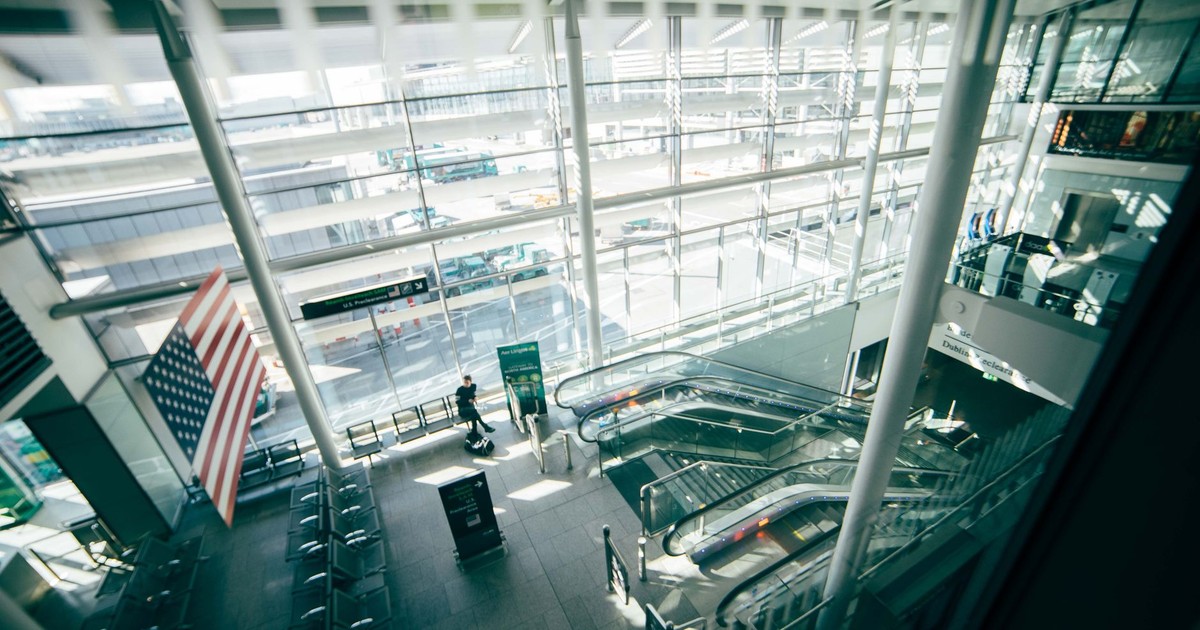
On National Hammock Day, July 22, 2026, the Transportation Security Administration shared photos on social media showing travelers relaxing in hammocks strung up inside airport terminals during long layovers and travel delays. The post, published on the agency’s official accounts, carried a message that cut through the bureaucratic register the TSA is typically associated with. “Nobody said you couldn’t bring a hammock to the airport,” the agency wrote, adding: “To reduce tension, or to avoid having a falling out with the airport, check with them about where you can and can’t hang your napping apparatus.” Within hours, the post had accumulated thousands of comments and ignited a national debate about airport comfort, passenger rights, public space, and the unspoken rules of terminal life.
Hammocks being allowed by the TSA is not a new rule, but the announcement received renewed attention due to the posts on social media. For frequent travelers who have long wondered about the exact limits of what can go into a carry-on or be set up in a terminal, the public statement provided something useful: an official answer to a question most people never thought to ask. That answer comes with a structural wrinkle that separates what the TSA controls from what individual airports decide, and that wrinkle is where most travelers will find the real complexity.
What the TSA Actually Said and What It Governs
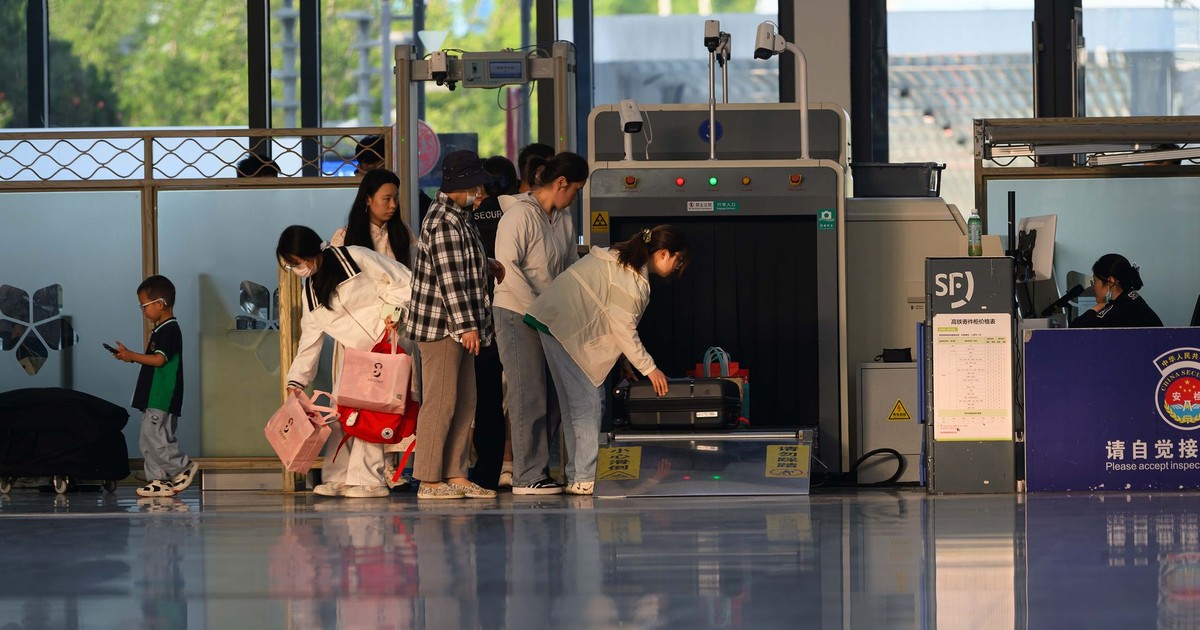
To understand the hammock announcement properly, it helps to understand the specific and limited scope of TSA authority. The agency’s mandate is screening: its jurisdiction begins at the checkpoint and ends there. The TSA only determines what travelers can bring through the security checkpoint. Once inside the terminal, individual airports, and in some cases local authorities, decide how those items can actually be used.
This distinction is not a loophole. It is the foundational architecture of how U.S. aviation security works. Even if an item is generally permitted, it may be subject to additional screening or not allowed through the checkpoint if it triggers an alarm during the screening process, appears to have been tampered with, or poses other security concerns. A hammock, made of fabric and lightweight straps or cord, raises none of those concerns. It is not combustible, it contains no dangerous liquids, it carries no electrical components, and it poses no threat to the aircraft or other passengers at the checkpoint. The TSA’s “What Can I Bring?” database does not list hammocks as prohibited items, and no federal regulation restricts their passage through a security lane.
The TSA confirmed hammocks are allowed in both carry-on and checked bags, a confirmation that is categorical and applies regardless of the hammock’s material, suspension system, or size, provided the item does not trigger independent alarm at screening. The more important second sentence from the same guidance is the one that changes the practical calculus entirely: just because a hammock can make it through security doesn’t mean travelers can hang one anywhere. USA Today reports that the TSA said passengers should check with the airport before setting up a hammock, as airport policies vary and some terminals may prohibit them because of safety or accessibility concerns.
The One Condition and Why It Is More Complicated Than It Sounds
The “one condition” attached to the TSA’s blessing is clear in principle and genuinely murky in practice. The TSA clears hammocks for passage through security screening, but the authority to approve or deny their setup between terminal pillars, beams, or seating areas belongs entirely to individual airports, subject to their own rules and local law enforcement guidelines.
This creates an immediate practical problem for travelers who want to act on the guidance. Airport rules are not standardized across the United States, and most airports do not publish explicit policies on hammock use. The Port Authority of New York and New Jersey, which operates John F. Kennedy, LaGuardia, and Newark Liberty airports, maintains rules and regulations governing personal conduct in terminals, prohibiting activities that “unreasonably endanger persons or property” or obstruct authorized traffic areas, language broad enough to encompass a hammock strung across a main walkway but potentially inapplicable to one secured in an out-of-the-way alcove. Los Angeles International Airport maintains its own separate rules framework under the Los Angeles Municipal Code. Neither airport publishes a dedicated hammock policy, because nobody anticipated needing one.
Diane Gottsman, an etiquette expert based in San Antonio and founder of The Protocol School of Texas, spoke directly to this ambiguity when responding to the TSA’s post. “Bringing your own hammock through security for the specific reason of setting up camp is not considerate of others in a tight public space,” Gottsman told Fox News Digital, noting that each airport has its own rules and safety policies. “Before you get caught stringing up your suspended apparatus between two poles, ask airport staff if there is a safe, out-of-the-way place to hang within the rules of the airport,” Gottsman said.
The advice to “ask airport staff” is reasonable in theory. In practice, it is complicated by the fact that airport staff are not uniformly knowledgeable about ad hoc comfort policies and individual terminals vary enormously in available attachment points, pedestrian density, and the presence of supervisory personnel. At least one traveler shared an account of a hammock they set up at an airport, noting that a police officer eventually told them to take it down, though the traveler did not recall which airport this occurred at.
Safety Considerations the Viral Coverage Has Largely Ignored
The physics of hammock suspension create a category of risk that is distinct from most carry-on items and deserves direct examination. A traditional hammock attached at two points exerts significant lateral and downward force on its anchor structures. At a shallow suspension angle of fifteen degrees, the kind of low, flat hang that looks most aesthetically appealing and is most common in social media images, a 200-pound person generates approximately 386 pounds of load on each attachment point. Airport columns, seating frames, and architectural fixtures are engineered for their specific structural purposes, and none of those purposes include hammock suspension. Attaching a hammock to decorative fixtures, emergency equipment housings, or features that were not designed for lateral load could, in a worst case, cause structural damage or collapse.
Accessibility is the second major safety dimension. Airport terminals are public spaces subject to the Americans with Disabilities Act, which requires unobstructed accessible routes throughout. A hammock strung across or adjacent to a main walkway or boarding area could narrow or block an accessible route, creating both a legal compliance problem for the airport and a genuine inconvenience or hazard for travelers using mobility aids.
A hammock may clear security without any issue, but airport staff can still tell travelers to take it down if it is attached to columns or fixtures, blocks walkways, creates a safety hazard, or otherwise violates airport policy. The public reaction to the TSA post made clear that not all travelers are weighing these considerations. While the TSA is okay with the practice, other social media users were less enthusiastic. “I have a feeling you’re going to regret this,” one person commented on the post.
The Broader Context: Why Travelers Are Thinking About This Now
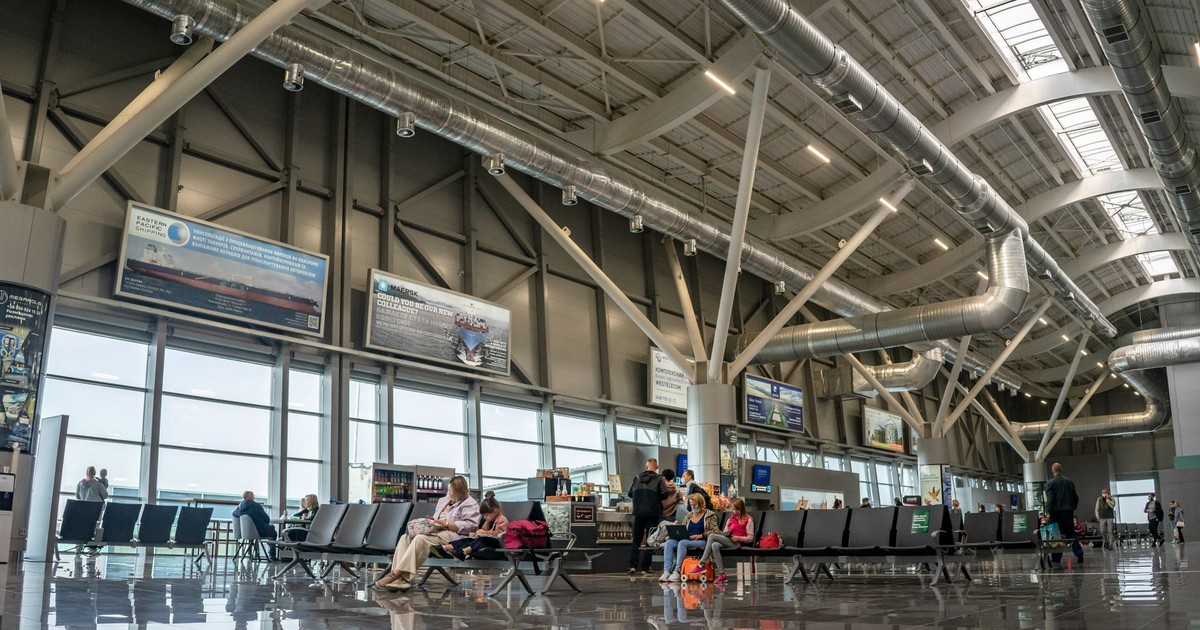
The hammock discussion did not emerge in a vacuum. It reflects a broader and genuinely significant shift in how Americans experience air travel in 2026. Flight delays, cancellations, and extended waits at gates have become a structural feature of the aviation landscape rather than an occasional disruption. For families traveling with children during weather events or operational meltdowns, the prospect of spending six to eight hours on a hard terminal seat or a carpeted floor creates genuine misery that a lightweight hammock could meaningfully address.
Many commenters said they loved the idea of packing a hammock for long delays, overnight layovers, or weather-related disruptions. The enthusiasm is understandable. Modern travel hammocks are remarkably portable: the best travel hammocks weigh under a pound, pack to the size of a grapefruit, and cost between $20 and $60. For budget travelers, GoWild pass holders managing standby situations, or any parent who has ever tried to get a toddler to sleep on an airport floor, the math on a thirty-dollar hammock is compelling. For tips on packing smart before you even reach security, these clever plane hacks are worth a read before your next trip.
This is not the first time the TSA has mentioned hammocks at airports. On National Hammock Day in 2025, the agency shared an image on Facebook of a traveler’s hammock in an airport. The 2026 announcement, however, went further in explicit clarity. TSA’s announcement drew discussion across hammock enthusiast communities online, where several people weighed in, with some pointing out that while TSA controls what travelers bring through a checkpoint, it does not control how passengers use something like a hammock once they are past security. That observation captures the jurisdictional split precisely.
Others suggested that airports should take the concept seriously by creating designated hammock areas or nap zones for stranded passengers. “They should just make this a thing at the airports,” one person wrote, while another suggested dedicated hammock cafés inside terminals. Some international airports already provide formalized rest facilities. Singapore Changi Airport offers official free Snooze Lounges in all four of its terminal transit areas, along with paid nap pods and private resting suites, and is frequently cited as the global standard for passenger comfort infrastructure. The TSA announcement may accelerate domestic conversations about what American airports have been slow to invest in.
A Practical Guide to the TSA Hammock Policy in 2026
For travelers who want to act on this guidance rather than simply read about it, the operating principles are as follows.
Checkpoint clearance is not the obstacle. Hammocks are not listed as prohibited items in TSA’s “What Can I Bring?” database, and the agency’s social media posts clearly demonstrate that a hammock itself is generally permitted through security. Pack it in your carry-on or checked bag. It will not trigger issues at the X-ray scanner.
Airport approval is the actual question. Before setting anything up, locate airport staff, not gate agents, who manage boarding operations, but terminal operations or customer service personnel. Ask explicitly and specifically: is there a designated area where passengers can hang a hammock? Accept the answer you receive.
Location selection determines legality. Airport staff, not the TSA, manage terminal operations. If you do find a permitted location, use wide tree-style suspension straps if appropriate and avoid attaching to anything that appears decorative, fragile, or connected to emergency equipment. Remote concourses during off-peak hours, near structural pillars in dedicated waiting areas, represent the best candidates. Main thoroughfares, boarding gate corridors, and any area adjacent to accessible routes are poor choices regardless of what airport staff say, because obstruction of accessible routes carries its own independent regulatory requirement.
Comply immediately if asked to stop. If an airport employee asks you to take the hammock down, do so immediately. The TSA’s confirmation that hammocks may pass through security does not constitute a legal right to use one anywhere in a terminal. Airport operators are private or quasi-public entities with their own authority over terminal use.
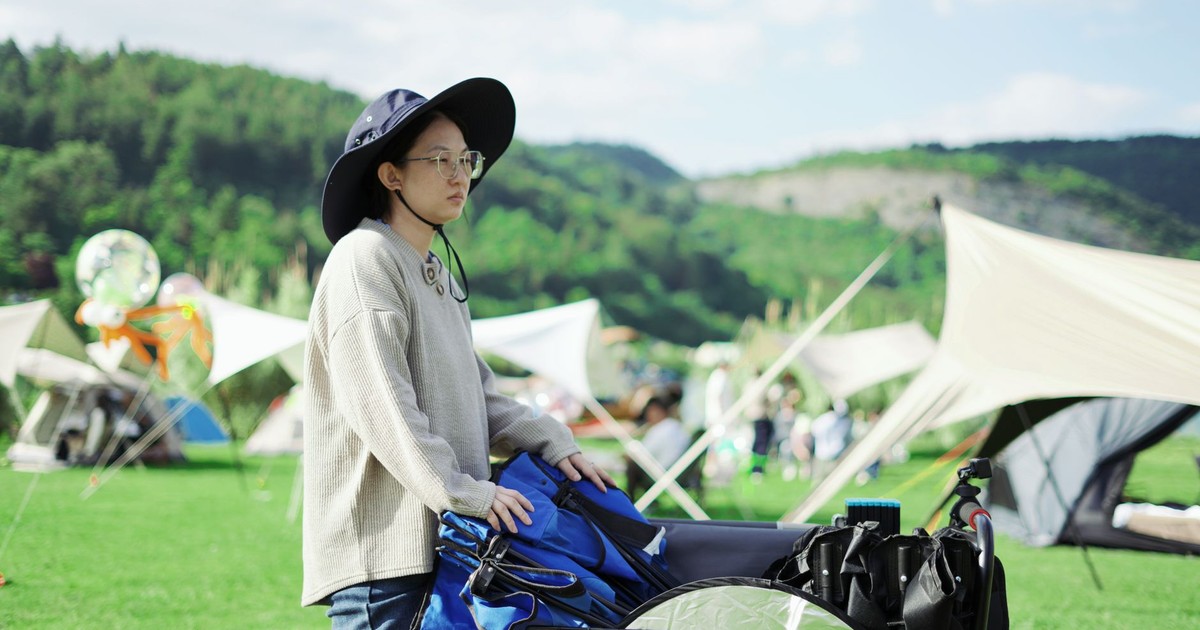
Freestanding frames change the calculus. A hammock suspended between two ground-anchored poles, a beach-style freestanding frame, creates no structural load on airport architecture and, if compact enough not to obstruct walkways, presents a much lower risk profile than a traditionally strung system. For travelers serious about terminal comfort, a freestanding travel hammock stand may be the option that generates the fewest objections.
The Part Nobody Tells You When They Share the Viral Post

The TSA hammock announcement is genuine, verified, and more instructive than its playful framing might suggest. The agency’s confirmation that hammocks are permitted through security checkpoints is clear and applies to both carry-on and checked luggage, with no specific exceptions based on hammock type or suspension system. That confirmation does not, however, constitute a blanket authorization to hang a hammock anywhere in a U.S. airport terminal.
The boundary between TSA jurisdiction and airport authority is the critical line every traveler needs to understand before packing a hammock for their next connection. Federal security law governs what enters the terminal. Airport operations staff, subject to each facility’s individual rules and to applicable state and local codes, govern how that equipment can be used once a traveler is through the checkpoint. Those are two separate decision-making authorities, and only the first one has issued clear, public guidance in favor of hammocks.
For families navigating long delays, overnight connections, or extended weather disruptions, the practical upside is real. A one-pound hammock that cost thirty dollars could meaningfully improve a twelve-hour terminal stay for a parent and child who would otherwise be competing for floor space near a charging outlet. But the responsible use of that option depends on asking the right people at the right airport and being prepared to accept a “no” without argument. The TSA opened the door. Whether a given airport lets you walk through it and string something between its pillars once you do is an entirely different question, and one that no viral post can answer for you in advance.
Disclaimer: This information is not intended to be a substitute for professional medical advice, diagnosis, or treatment and is for information only. Always seek the advice of your physician or another qualified health provider with any questions about your medical condition and/or current medication. Do not disregard professional medical advice or delay seeking advice or treatment because of something you have read here.
AI Disclaimer: This article was created with the assistance of AI tools and reviewed by a human editor.