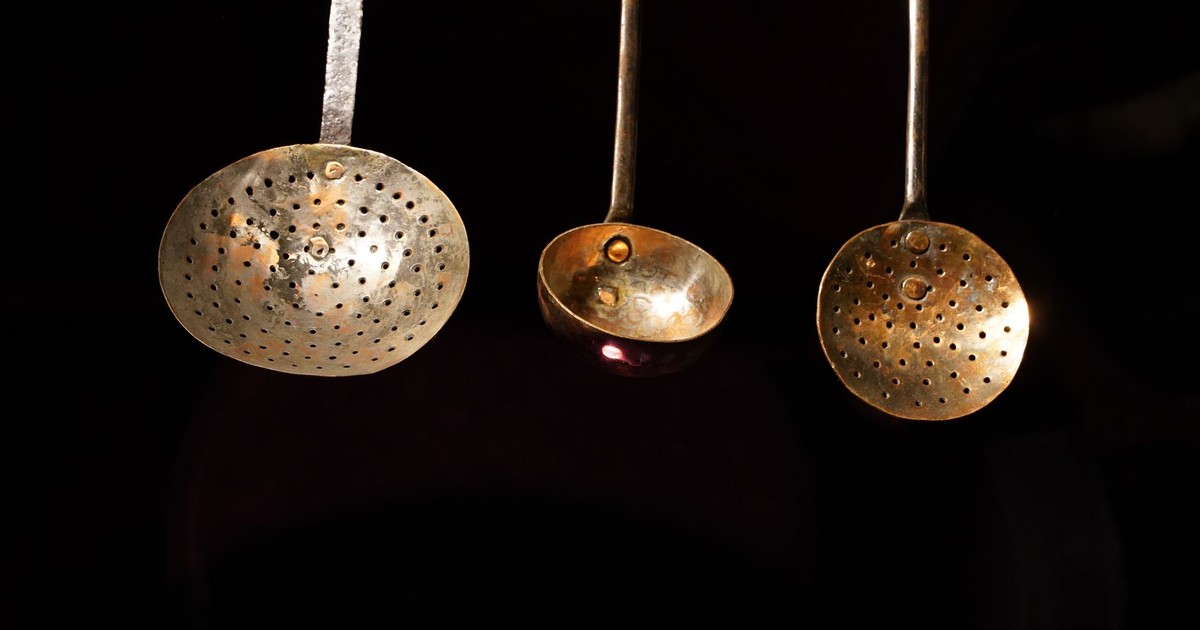

Most people can name a handful of Viking-era objects: the longship, the helmet, maybe a battle axe. A woman crouched beside a central fire in a smoky longhouse, stirring a barley stew in a soapstone pot while a loom clicks somewhere in the dark behind her, appears far less often. Archaeologically speaking, the second image is more accurate.
The Viking Age ran from roughly the late 8th century to the early 11th century. For the vast majority of the people living through it, daily life had nothing to do with raiding or conquest. Most Vikings lived a fairly mundane existence as farming folk. They woke up, kept the fire alive, processed grain, mended clothing, and went to bed on a bench.
The objects they used survived in burial mounds, waterlogged soil, and archaeological sites across Scandinavia, the British Isles, Iceland, and Greenland. What those objects reveal is that Viking household items were both ingeniously practical and deeply embedded in the rhythms of a life organized around cold, hunger, and the need to keep everything running without a hardware store in sight.
1. The Central Hearth
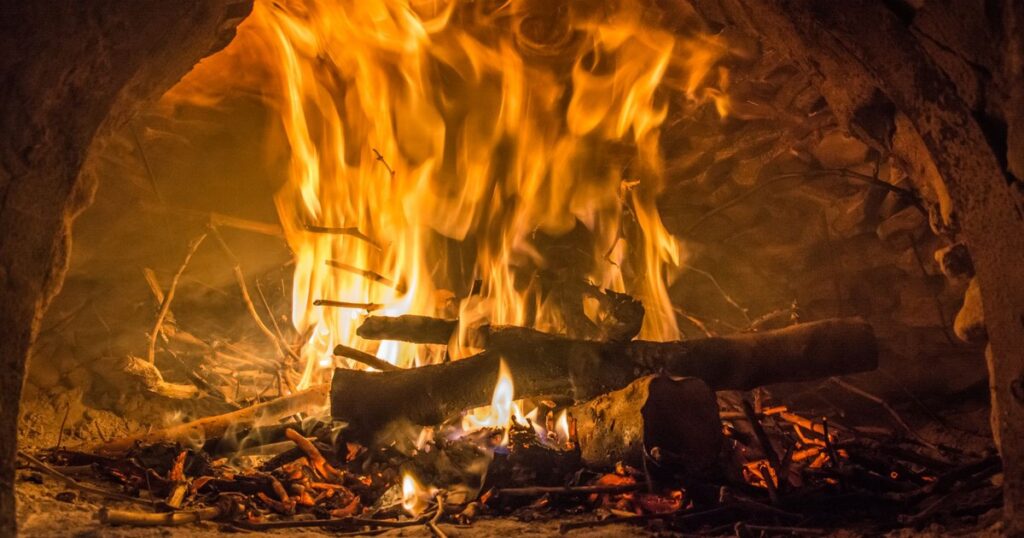
A stone hearth was set in the middle corridor of the longhouse. Fires in the hearth were used for lighting, heating, and cooking the family’s food. That single open fire did the work that, in a modern home, would be split between a furnace, a stovetop, an oven, and every overhead light in the building. When it went out, things got serious very quickly, particularly in January in Norway.
The hearth was usually a rectangular or oval pit lined with stones. A fire was kept burning almost continuously, especially in colder months, and smoke from the fire slipped out through a hole in the roof, which also let natural light into the longhouse during the day. There were no windows. The hole in the thatch above the fire was, functionally, both chimney and skylight.
The hearth carried enormous social and ritual weight. According to The Conversation, archaeological material supports the idea that the dead had a presence in Iron and Viking Age houses, with infants buried in hearths and postholes throughout the first millennium. The fire at the center of the home was not just a heat source. Sagas were told around it. Decisions were made beside it. It was the place where family life happened.
2. Soapstone Vessels
Soapstone was to Viking cooking what plastic is to modern kitchens: cheap, everywhere, and so useful that life without it is hard to imagine. According to the Museum of Cultural History, University of Oslo, if you were to cook porridge, stew, or something similar, you would take a soapstone pot to place over the fire. Soapstone, or steatite, was very practical and was popular from the Viking Age throughout the medieval period.
Soapstone holds heat evenly, resists cracking under temperature changes, and is soft enough to carve into bowls and pots without specialist metalworking tools. As documented by The Viking Herald, archaeological evidence of items fashioned from soapstone has been discovered across the former Viking world, including as far away as Iceland and Greenland, and their presence speaks to the regional trade networks that underpinned much of the economic life of early medieval Europe.
A soapstone pot found in an Icelandic farmstead almost certainly began its life in a Norwegian quarry, passed through several sets of hands, and crossed open ocean before it ever sat over a fire. People do not trade bulk cooking vessels across the North Atlantic unless those vessels are genuinely irreplaceable.
Soapstone vessels were also popular goods for exporting during the Viking Age, often used as grave goods. In the subsequent Middle Ages, however, they became more of a consumable item and were no longer exported. By the height of the Viking Age, soapstone pots were simply part of the kitchen.
3. The Whetstone
A blade that can’t hold an edge is not a tool. It’s a piece of metal. Every knife, axe, and farming implement in a Viking household needed regular sharpening, which meant every Viking household needed a whetstone. You could not do most of the physical work of Viking life without a sharp blade, and you could not keep a sharp blade without a whetstone.
According to the National Museum of Ireland/viking), evidence for ironworking in Viking settlements comes in the form of blacksmith’s tools including tongs, hammers, knives, saws, chisels, punches, files, whetstones, and grindstones. Whetstones appear in domestic and workshop contexts alike, in graves, and in the holds of trading ships.
Particular varieties, especially the fine-grained Norwegian mica schist whetstones quarried in the Eidsborg region, were so desirable that they were traded across the entire Viking world as a commodity in their own right, not just a local tool. Keeping blades sharp was not a specialist craft. It was a daily household task. Archaeology finds whetstones worn smooth from thousands of strokes.
4. The Vertical Loom
Fabric did not arrive folded from a shop. Every piece of cloth in a Viking household was produced by hand, and the upright warp-weighted loom was the machine that made that possible. One end of the Viking longhouse might be used as a barn to keep cattle and horses in winter, while the other end could be set up as a workroom for artisanal crafts or the family’s vertical loom.
Spindle whorls, loom weights, and small household tools bring you close to the routines that structured daily life in ways that more dramatic artifacts simply cannot. Spindle whorls, the small weighted discs that helped thread spin evenly, are among the most commonly found Viking-era household objects at archaeological sites. The loom weights that held the warp threads taut have been recovered in clusters that give archaeologists a clear picture of exactly where the looms stood and how large they were.
Women were the primary weavers in Viking households, and the skill carried real economic value. Woolen cloth was a traded commodity, not just domestic production. The Icelandic vadmal, a standardized woven fabric, was so widely accepted as a unit of exchange that it functioned effectively as currency in some contexts. A good weaver was not just keeping her family clothed; she was generating a tradeable product from raw materials the household raised and processed themselves.
5. Wooden Storage Chests
Wooden chests served a dual purpose: as a stool, but also to store valuables such as jewelry, silver, and clothing. In a home with no built-in wardrobes, no shelving units, and no dedicated storage rooms, the chest was the primary answer to the question of where things go. It traveled with its owner when they moved, sat along the wall of the longhouse bench as extra seating during the day, and held everything that mattered at night.
As the National Museum of Ireland’s Viking collections record, woodworkers, carpenters, coopers, and basket weavers were active, producing a range of objects including wooden bowls, plates, pails, buckets, barrels, tubs, spatulas, platters, cups, spoons, mortars, trays, baskets, and boxes. The woodworking tradition in Viking communities was sophisticated enough to produce furniture that was both sturdy and decorated, with carved designs that reflected the same artistic sensibility found in metalwork and stonework.
Wood carved for furniture or house fittings was often decorated with elaborate designs in the Ringerike style. The chest also had a security function. Households were not always small nuclear families. They included extended family members, farm workers, and sometimes enslaved people. A locked chest was one of the few forms of personal security available in a home where everyone slept in the same large room and privacy was essentially nonexistent.
6. Iron Cooking Pots and Kettles
Alongside soapstone vessels, iron cooking pots and kettles were essential Viking household items for anyone who could afford the metalwork. Iron held heat differently than soapstone and was better suited to certain cooking methods, particularly for larger quantities over a sustained fire. Stews made from barley, root vegetables, and whatever protein the season allowed were the foundation of the diet, and an iron pot over a central hearth was the standard method of producing them.
The JORVIK Viking Centre, which draws on the extraordinary archaeological record from Viking-age York, notes that the organic-rich soil at Coppergate preserved not just metal and stone objects but wooden debris, textile fragments, and manufacturing waste. Iron pots turn up in domestic contexts across the Viking world, often suspended over the hearth on iron chains that allowed the cook to raise or lower the vessel to control the heat.
The diet that went into those pots was more varied than popular imagination suggests. The Viking diet was heavily protein and fat-based. Large amounts of fish were consumed, which is unsurprising given that Vikings lived on the coast and spent much of their lives at sea. Considerable quantities of meat and dairy were also consumed, though porridge and bread were popular foods for poorer households.
7. Bone and Antler Combs
The Vikings had a well-documented concern with personal grooming that tends to surprise people expecting a less fastidious warrior culture. Combs are among the most frequently excavated Viking household items, found in graves, homes, and trading settlements from Dublin to Kiev. Even simple items like combs, often made of bone or antler and beautifully carved, give us an idea of personal hygiene and daily routines.
They were practical objects, but they were also made with care. Antler combs are often finely decorated, with geometric patterns incised along the spine. Contemporary accounts from Arabic and Anglo-Saxon writers noted that Viking men in particular were notably more concerned with their appearance than their continental European counterparts. Combs were part of a broader personal care kit that included ear picks, nail cleaners, and tweezers.
The material choice mattered. Antler was the preferred medium because it was both widely available, every household that hunted deer had access to shed antler, and pleasantly smooth, with a density that allowed fine carving without fracturing. In a culture where appearance carried social information, keeping your hair clean and untangled was a marker of status and self-respect.
You can find a similarly revealing window into everyday objects that shaped domestic history in the history of the household sink.
8. Iron Locks and Keys
Of all the Viking household items, the iron lock and key combination is perhaps the most psychologically interesting. As the National Museum of Ireland’s Viking collections note, the manufacturing of iron locks and keys indicates that valuables had to be safeguarded against theft. That simple fact tells you a great deal about Viking society: it was not the unified, trust-based community of popular myth. People locked things. People stole things. And someone had to hold the key.
That person was usually the woman of the household. Archaeological finds across Scandinavia show keys buried with women, worn at the waist on a chatelaine, a chain or ring from which household keys and tools were suspended. The key was not just a functional object; it was a symbol of domestic authority. The woman who held the keys controlled access to the food stores, the silver, the cloth, and everything else the household needed to survive the winter.
You can see the same principle documented at sites like Birka in Sweden, where archaeological findings suggest that women took an active role in economic activities, running stalls and trading goods with both local and foreign merchants. The locks themselves were sophisticated for their era: iron constructions with tumbler designs that required a specifically shaped key, not just any piece of metal.
Finding locks and keys buried as grave goods confirms that these were personal possessions tied to individual identity, not just utility hardware bolted to a door frame. The woman who went to her grave with her keys was buried with what she had been in life: the person who held the household together.
What These Objects Actually Tell Us
The popular image of Viking life is so dominated by warfare and exploration that the domestic world gets flattened into a backdrop, a smoky hall you pass through on the way to the longship. But the archaeological record tells a different story. The objects that survive in the greatest numbers, found in the most consistent contexts, across the widest geographic range, are not weapons. They are cooking pots, loom weights, combs, and storage chests.
A key worn at the waist of a woman buried in a Norwegian farm grave connects her, across a thousand years, to every person who has ever been the one in a household who keeps track of where everything is, who makes sure the food lasts through winter, and who is, functionally, practically, irreplaceably, the reason the whole operation holds together. The sagas remembered the warriors. The soil remembered everyone else.
AI Disclaimer: This article was created with the assistance of AI tools and reviewed by a human editor.