

The gap between the very wealthy and everyone else has always existed. What’s changed is how visible – and how deliberate – the separation has become. It’s no longer just about what you can buy. It’s about which world you inhabit, which systems you use, and how rarely those worlds intersect with the one most of us move through every day. The ultra-rich are not simply living better versions of ordinary life. They are opting out of ordinary life altogether, piece by piece, institution by institution.
Globally, billionaire wealth rose by more than 16 percent in 2025, reaching a record $18.3 trillion, and since 2020, that wealth has grown by 81 percent. Those aren’t just impressive returns on investment. They are the fuel for an entirely separate infrastructure – one that runs parallel to the public systems the rest of us depend on, rarely touching them, and increasingly not needing to. The wealth inequality lifestyle being built at the top isn’t a side effect of financial success. For many, it’s the point.
What follows is what that separation actually looks like, domain by domain, in 2026.
1. Private Aviation Replaces Commercial Travel Entirely

In 2026, the global private jet fleet stands at 24,270 aircraft, the market is valued at more than $26 billion, and flight activity has risen to 32 percent above pre-pandemic norms. That number is not a pandemic-era spike that corrected itself – it is a permanent reset in how the ultra-wealthy move through the world. No TSA lines, no gate delays, no strangers in the adjacent seat, no shared anything.
Global business jet activity in 2025 reached more than 3.5 million flights, representing year-over-year growth of just over 6 percent, and private jet flight activity is now 33 percent higher than pre-COVID 2019 levels. For the wealthiest travelers, the commercial airport has become a place they drive past on the way to the fixed-base operator terminal. The experience of air travel that the rest of the world shares – the crowded gate, the middle seat, the three-hour delay – has been entirely removed from their frame of reference.
The broader cultural consequence is that the shared discomfort of commercial travel, which historically functioned as one of the few great equalizers, no longer applies to a growing segment of the population. They haven’t improved their experience of flying. They’ve replaced it with a different activity that happens to also involve aircraft.
2. Concierge Medicine Builds a Two-Tier Health System

Private Medical, one of the leading ultra-premium health practices in the United States, has taken concierge medicine to a whole new level – rather than simply offering on-call doctors and faster visits, it has pioneered a highly personalized, all-in-one service more akin to the most sophisticated family offices for investments. The annual fee at practices like this runs to $40,000 or more per family. The physician panel is capped at a fraction of what a standard primary care doctor carries.
Like family offices managing financial portfolios, these practices have an in-house team to manage a family’s entire health portfolio – from fitness and dietary tracking to longevity research, surgeries, and medical emergencies – and now serve more than 1,000 wealthy families across offices in California, New York, and Miami. For the ultra-wealthy, healthcare is no longer reactive. It’s a fully managed, continuously monitored system with a dedicated team on retainer.
The result is a health system that has effectively split in two. One tier operates inside the same strained public infrastructure that most Americans navigate – underfunded ERs, months-long specialist waitlists, five-minute appointments. The other tier has made the waiting room obsolete. When the people with the most political influence have no personal experience of healthcare delays or denial, the policy incentives to fix those problems become correspondingly weaker.
3. Gated Communities and Private Neighborhoods Create Physical Separation
The ultra-wealthy have long lived in expensive neighborhoods. What’s newer is the degree to which those neighborhoods now function as self-contained jurisdictions – with private roads, private security forces, private emergency response, and, in some cases, private governance structures. The distance between the gated community and the surrounding city is no longer just aesthetic. It’s operational.
As of January 1, 2026, the collective net worth of America’s top 12 billionaires now surpasses $2.7 trillion, having more than quadrupled from $608 billion in March 2020, according to the Institute for Policy Studies analysis of Forbes Real Time Billionaire Data. That concentration of capital funds not just private homes but private civic infrastructure – the kind that effectively removes the ultra-wealthy from dependence on public services entirely. When your neighborhood has its own water management, its own emergency response contractor, and its own road maintenance, city hall becomes something you read about rather than experience.
4. Private Schooling Pipelines Bypass Public Education
Elite private schools have always existed. What distinguishes the current moment is the explicit pipeline architecture: the pre-kindergarten feeder school that connects to the primary school that connects to the boarding school that connects to the Ivy League college that connects to the right internship and then the right firm. The point isn’t just a good education. It’s a social network that begins at age four and functions for life.
Billionaires are over 4,000 times more likely to hold political office than ordinary people, and the educational path that produces those outcomes runs almost entirely through private institutions with enrollment processes, tuition structures, and alumni networks that are invisible to the majority of families. The curriculum at an elite boarding school is less the point than the cohort: the people your children will know, work with, marry into, and do business with for the next fifty years.
The knock-on effect is that public education, which in theory is where a society transmits its shared values and builds its shared identity, is increasingly something the ultra-wealthy fund through taxes while never experiencing themselves. The investment in improving it becomes an abstract civic obligation rather than a personal stake.
5. Family Offices Replace Banks and Financial Advisors
A family office is exactly what it sounds like: a private company whose entire purpose is managing the financial, legal, tax, and administrative affairs of a single ultra-wealthy family. The threshold for establishing one has historically been around $100 million in investable assets, though multi-family offices now serve clients at lower levels.
The rise of family office-style practices reflects the surge in wealth among families worth $100 million or more and growing demand for hyper-personalized, data-driven management from an aging class of billionaires and millionaires. This applies to health, but the model runs across every domain of life. Tax structuring, estate planning, philanthropic vehicles, staffing management, security coordination, travel logistics – all of it managed in-house by a dedicated team that works for one family and answers to no one else.
The practical outcome is that the ultra-wealthy don’t interact with retail banks, financial advisors, tax prep services, or HR platforms. The infrastructure of financial life that most people use – and that shapes most people’s financial decisions through its defaults and limitations – doesn’t apply to them. They have their own.
6. Media Ownership Shapes the Information Environment
Governments are allowing the super-rich to dominate media and social media companies, with billionaires now owning more than half the world’s largest media companies and all the main social media companies. This is not a new phenomenon. What has accelerated is the transparency of it – and the directness of the relationship between ownership and editorial direction.
According to Oxfam’s 2026 report “Resisting the Rule of the Rich,” the cases include Jeff Bezos’ purchase of the Washington Post, Elon Musk with Twitter/X, Patrick Soon-Shiong with the Los Angeles Times, a billionaire consortium buying large shares of The Economist, and in France, billionaire Vincent Bolloré now controlling CNews, rebranding it as the French equivalent of Fox News. The wealthy have always had outsized influence on the press through advertising and ownership. The shift now is one of personal editorial control – the news source as an instrument of a single individual’s worldview.
For everyone else, this creates an information environment in which the framing of the world’s problems is increasingly filtered through the interests of the people who own the platforms. The wealth inequality lifestyle at the top extends to the stories that get told about it.
7. Private Security Replaces Reliance on Public Law Enforcement
High-net-worth individuals have always hired personal security. The scale has changed. The ultra-wealthy now employ security operations that function more like private intelligence agencies: advance teams, threat assessment units, cybersecurity divisions, residential fortification, and travel security details that scout destinations ahead of arrival.
Oxfam’s 2026 report focuses specifically on how the super-rich use their extreme wealth to buy politics, media, and justice to defend their own fortunes. Private security is part of that same logic – an acknowledgment that the protection provided by public institutions cannot be customized or guaranteed for individuals at this wealth level, and so it gets replaced with a private system that can. The police respond to the same emergency as everyone else. The private security detail was already there.
8. Longevity and Biohacking Become a Private Science

The ultra-wealthy are not just buying access to better healthcare. They are funding an entirely separate research ecosystem aimed at extending their own lives. Longevity clinics, personalized genomics, continuous biomarker monitoring, experimental therapies, and elite wellness facilities have become the frontier of a health investment that is, by definition, unavailable to most people.
Premium concierge practices now leverage advanced technology platforms for continuous monitoring and predictive analytics, with smart implants and wearable devices allowing real-time monitoring of cardiac activity, blood sugar levels, and other biological functions from remote locations. What makes this qualitatively different from a gym membership or a good diet is the degree of personalization and the access to research and technology that exists nowhere in the public health system.
The practical implication is that the wealth gap may eventually become, in part, a longevity gap – the ultra-wealthy living measurably longer, healthier lives, their bodies managed with the same precision as their investment portfolios. That outcome compounds every other inequality across subsequent generations.
9. Superyachts and Private Islands Function as Mobile Jurisdictions
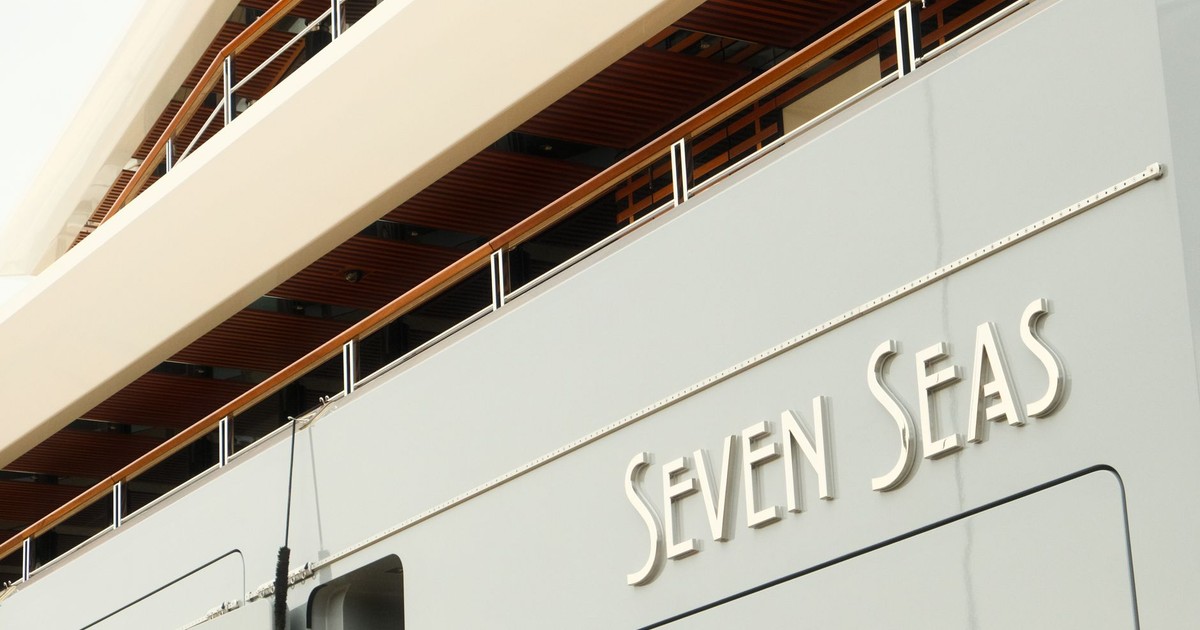
A superyacht is not just a luxury asset. At the scale of the ultra-wealthy, it is a floating residence that operates outside any fixed jurisdiction, carries its own crew, its own security, its own communication infrastructure, and, in some cases, its own submarine. The owner is, effectively, stateless when at sea.
The number of billionaires has surpassed 3,000 for the first time in history, and in October 2025, the world’s richest man became the first person to have wealth over half a trillion dollars. The assets that come with that level of wealth are not just symbols of success – they are operational tools for living outside the systems everyone else inhabits. A private island isn’t a vacation destination when it has its own airstrip, desalination plant, medical facility, and internet infrastructure. It is, functionally, a private country.
10. Political Access Creates a Separate Civic Reality

Extreme wealth is increasingly translating into political power, with billionaires estimated to be 4,000 times more likely to hold political office than ordinary citizens. That number deserves to be read slowly. It means that the rules governing everyone else’s lives – tax codes, healthcare legislation, labor law, environmental regulation – are increasingly written by or with the direct participation of the people those rules are designed to constrain.
The collective wealth of billionaires surged by $2.5 trillion in 2025, almost equivalent to the total wealth held by the bottom half of humanity, and the chances of democratic backsliding – through erosion of the rule of law or undermining of elections – are seven times more likely in highly unequal countries. The wealth inequality lifestyle, at its political edge, is not just about personal comfort. It is about the capacity to shape the environment in which everyone else lives – without being subject to the consequences of that environment yourself.
11. Private Clubs and Members-Only Networks Replace Public Institutions

There is a version of civic life that runs entirely through institutions most people will never enter: ultra-exclusive clubs with decades-long waitlists, invitation-only conferences, private dining societies, and member networks where business gets done without a public record. The function these spaces serve is not primarily social. It is the maintenance of a closed network in which capital, influence, and opportunity circulate among the same few thousand people indefinitely.
In 2024, rich Americans needed a net worth of at least $3.3 billion to enter the Forbes 400, and the average member held a net worth of over $13 billion, nearly 18 times the 1982 average after adjusting for inflation. The network effect of that concentration is compounding. The people at Davos know the people at the private equity conference who know the people in the members-only club whose children attend the same four boarding schools. The doors that open in those rooms don’t appear on any public ledger.
12. Tax Structures Build a Separate Financial Reality
The ultra-wealthy do not experience the tax system the way most people do. Not because they simply pay more – they often pay a lower effective rate than the middle class – but because the structure of their wealth means the conventional tax categories barely apply. Unrealized capital gains, which is the bulk of billionaire wealth, are not taxed at all until assets are sold. Complex trust structures, offshore vehicles, and charitable foundations all legally reduce the taxable base further.
Federal Reserve data indicates that as of Q1 2024, the top 1 percent of households in the United States held 30.5 percent of the country’s wealth, while the bottom 50 percent held just 2.5 percent. The tax systems that were designed when wealth was primarily earned as income have not caught up with the reality of wealth held as appreciating assets. The result is a fiscal architecture in which the ultra-wealthy accumulate at a rate that their tax obligations barely touch, while the public infrastructure that everyone else depends on is funded predominantly by wages.
The separation here is not just financial. It is structural. When the people with the most wealth pay effective rates that diverge sharply from the middle class, the social contract that connects taxation to shared investment in public goods begins to dissolve.
What the Separation Really Means

None of these twelve things is new in isolation. Private schools have existed for centuries. Private doctors have always been available to those who could afford them. What is different now is the comprehensiveness and the speed. Billionaire wealth has increased by 81 percent since 2020, reaching an all-time high of $18.3 trillion in 2025, and the infrastructure of separation has grown proportionally to that accumulation. It is no longer a collection of individual luxuries. It is an alternative operating system for life.
The deeper issue – the one that all twelve of these items circle around – is what happens to shared institutions when the people with the most influence over them no longer use them. Public hospitals, public schools, commercial airports, public roads, the open internet, representative government: all of these depend, at least partly, on a shared stake in their functioning. When that stake is removed – when the most powerful people route around those systems entirely – the political will to fund and maintain them tends to follow.
That’s not a conspiracy. It doesn’t require bad intentions. It just requires people to prioritize what they can feel. And when you haven’t waited in an ER, sat in a public school classroom, or flown commercial in fifteen years, the urgency of those systems is very easy to lose. The concern isn’t that the ultra-wealthy are living differently. It’s that their lives have become so structurally separate that the systems the rest of us depend on have lost their most politically powerful advocates – not through malice, but through simple irrelevance. When a problem doesn’t touch you, it stops being your problem. And at $18.3 trillion in accumulated wealth, very few problems still touch them.
AI Disclaimer: This article was created with the assistance of AI tools and reviewed by a human editor.