

At first glance, the puzzle seems simple. A jug pours milk into a network of pipes, and several glasses sit at the bottom labeled A through F. The question appears straightforward. Which glass will fill first? Most people lean closer to the screen, tracing the lines carefully with their eyes. Some answer quickly, trusting their first instinct. Others pause and analyze each pipe one by one. Within minutes, people begin debating their choices with surprising confidence.
What makes this puzzle interesting is not only the challenge itself, but also the claim attached to it. Many viral versions suggest that the glass you pick reveals something about your personality. Some even frame the result as a sign of whether someone tends to be a “taker” or a “giver.” People naturally want to know what their choices say about them.
This curiosity helps explain why puzzles like this spread so quickly across social media. They combine three powerful ingredients. First, they offer a visual challenge that invites people to test their observation skills. Second, they promise a glimpse into personality or thinking style. Finally, they encourage discussion, which makes them highly shareable. Friends often compare answers, debate solutions, and wonder whether their choice reveals something deeper.
However, the truth is more complicated than a simple personality label. Psychology research does not support the idea that choosing a particular glass proves someone is selfish, generous, or anything else quite so definitively. Human personality is far too complex to measure through a single puzzle. Even so, the way people approach the problem can reveal interesting clues about how they think.
In fact, cognitive psychologists have long studied how people solve visual puzzles and logic challenges. These studies show that individuals often rely on different mental strategies when faced with a problem. Some people prefer fast, intuitive decisions. Others slow down and analyze every detail before concluding. Both approaches appear in everyday life, from solving math problems to making important decisions.
The Glass Puzzle
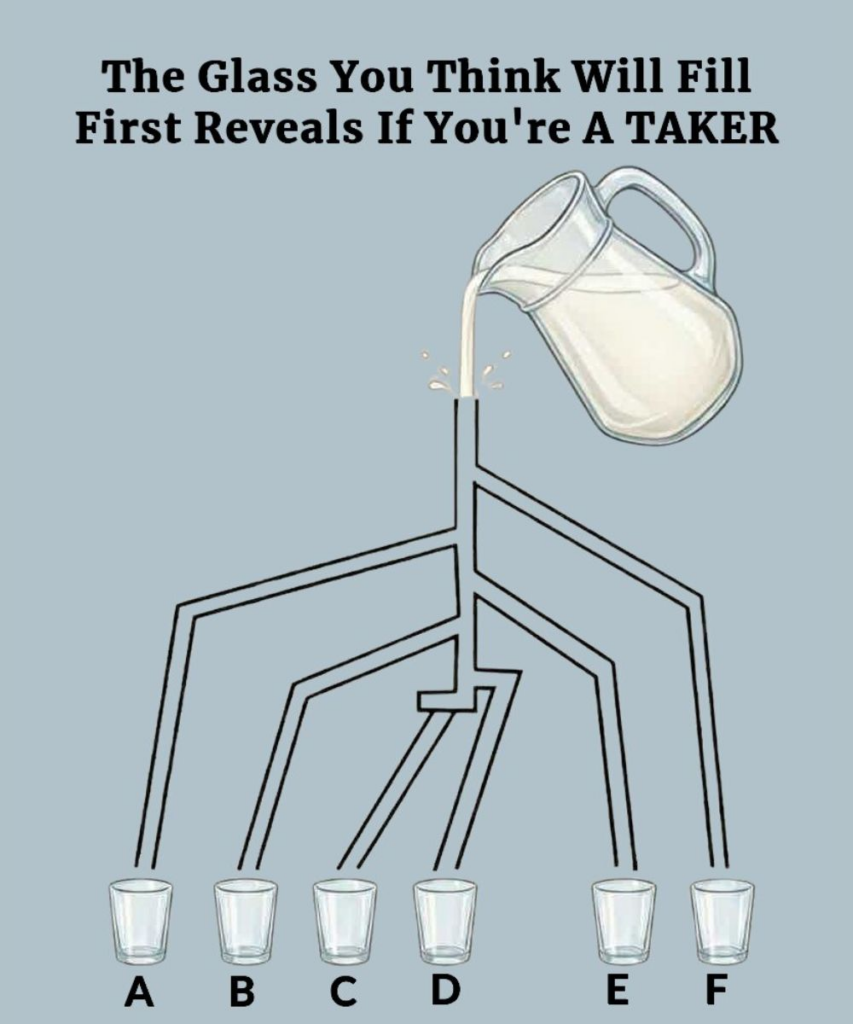
The glass puzzle offers a small example of these thinking styles in action. When someone scans the image quickly and chooses the first path that looks open, they rely on instinctive pattern recognition. Meanwhile, a person who carefully checks every pipe may rely more heavily on analytical reasoning. Neither method is inherently better than the other. Instead, they simply reflect different cognitive habits.
Puzzles like this also reveal how easily our brains can be tricked by visual information. The human mind constantly searches for patterns and shortcuts to save time and effort. Most of the time, those shortcuts help us navigate the world efficiently. Yet in puzzles designed to confuse us, those same shortcuts can lead us straight to the wrong answer.
For this reason, psychologists often use visual challenges to study attention, perception, and decision-making. These experiments show that small details, such as a blocked pipe or an unexpected turn in a path, can completely change the outcome of a problem, which many people overlook at first glance.
So while the puzzle may not truly diagnose personality traits, it does reveal how our brains process information, how we make decisions, and why people often arrive at different conclusions even when looking at the same image.
Why the Brain Loves Visual Puzzles
Before we explore thinking styles and decision making, it helps to understand why puzzles like this are so appealing in the first place. Humans have always enjoyed challenges that test perception and reasoning. From riddles in ancient cultures to modern smartphone brain games, puzzles stimulate the brain in ways that feel both engaging and rewarding.
Visual puzzles are particularly powerful because they activate several mental systems at once. When someone looks at the glass-and-pipes puzzle, the brain immediately begins analyzing patterns and connections. The mind tries to determine which pipes are open, which ones are blocked, and how liquid might flow through the system.
This process activates the brain’s pattern recognition system. Humans evolved to identify patterns quickly because doing so helps with survival and everyday decision-making. For example, recognizing the shape of a dangerous animal or the direction of moving traffic requires fast interpretation of visual cues.
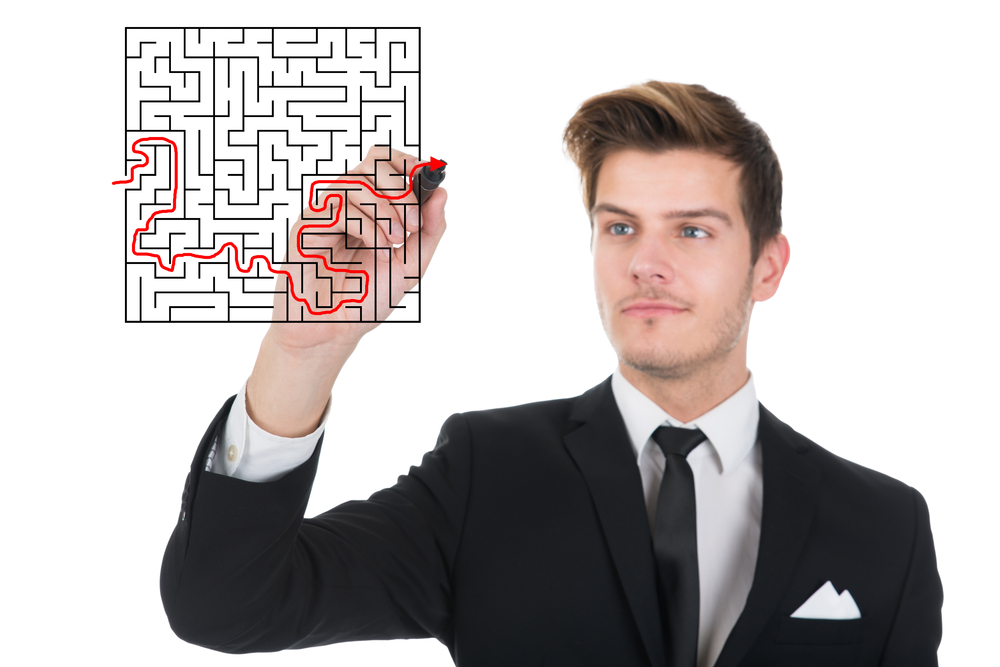
However, the same ability that helps us navigate daily life can also cause mistakes in puzzles. When the brain sees a complex network of pipes, it often assumes the most obvious path must be correct. Instead of carefully verifying every detail, many people follow the first line that appears open.
Psychologists describe this behavior as using mental shortcuts, or heuristic reasoning. These shortcuts allow the brain to solve problems quickly without expending too much effort. Most of the time, they work well. Yet puzzles are intentionally designed to exploit them.
The glass puzzle contains several pipes that look open at first glance but are actually blocked. Because the brain prefers continuous lines and simple patterns, it may overlook those small barriers. As a result, many people confidently choose the wrong answer.
Another reason puzzles feel satisfying is the brain’s reward system. When someone solves a problem successfully, the brain releases small amounts of dopamine, a chemical linked to motivation and pleasure. That sense of accomplishment encourages people to keep solving puzzles or share them with friends.
Interestingly, puzzles become even more appealing when they include a hint of mystery. When a headline claims that “most people get this wrong,” readers feel challenged. They want to prove they can solve it. When the puzzle also promises to reveal something about personality, curiosity increases even more.
Psychologists sometimes call this effect the information gap. When people sense a gap between what they know and what they want to know, they feel motivated to close it. The glass puzzle creates that gap perfectly. Readers want to discover both the correct answer and what their choice might reveal about them.
Fast Thinking vs Slow Thinking
To understand why people choose different glasses, it helps to look at one of the most influential ideas in modern psychology. Psychologist and Nobel Prize winner Daniel Kahneman introduced the concept of two mental systems that guide human thinking. He explained this theory in his well-known book Thinking, Fast and Slow. According to this theory, the brain uses two distinct approaches when making decisions.
The first is fast thinking, often called System 1. This mode is automatic, intuitive, and quick. It allows people to recognize faces, understand language, and make rapid judgments without conscious effort. System 1 relies heavily on experience and pattern recognition.
The second is slow thinking, known as System 2. This mode requires effort and concentration. It activates when we solve complex problems, check calculations, or analyze information carefully.
When someone encounters the glass puzzle, fast thinking usually takes control first. The brain quickly scans the image and forms an immediate impression about which pipe appears open. Within seconds, many people feel confident in their answer. However, the puzzle is designed to trick this quick system. Small blockages disrupt the path of the liquid, yet they are easy to miss during a quick glance.
Slow thinking becomes important when someone begins tracing the pipes carefully. Instead of relying on first impressions, they analyze the structure step by step. They check each connection and verify whether the path is truly open.
Both systems play important roles in everyday life. Fast thinking helps people react quickly to familiar situations, while slow thinking helps prevent mistakes in complex decisions. The glass puzzle highlights how these two systems interact. Some people answer instantly based on intuition, and others pause and analyze the puzzle carefully before deciding.
Neither approach automatically reflects intelligence. Instead, it reveals how the brain balances speed and accuracy when solving problems.
Why People Often Choose Different Glasses
Even when looking at the same image, people frequently arrive at different answers. Several psychological factors help explain this phenomenon.
One major factor is selective attention. The human brain cannot process every detail at once. Instead, it focuses on certain areas while ignoring others. As a result, two people may notice completely different parts of the puzzle first.
Another factor involves cognitive bias. Once someone believes they have identified the correct path, they may stop searching for contradictory evidence. This tendency, known as confirmation bias, can lead people to overlook blocked pipes or hidden barriers.

Experience also plays a role. Individuals who regularly solve puzzles often approach them methodically. They expect hidden tricks and therefore examine each path carefully. Meanwhile, people who encounter puzzles less often may rely more heavily on intuition.
Confidence also influences decision-making. When someone feels sure about their answer, they may not feel the need to double-check every detail. While confidence can be useful in many situations, it sometimes leads to errors in visual puzzles.
These differences explain why debates about puzzle answers can become surprisingly passionate. Each person believes their reasoning is sound, yet they may have used completely different mental strategies.
The Myth of “Takers” and “Givers”
Many versions of the puzzle claim that your answer reveals whether you are a “taker” or a “giver.” This idea sounds intriguing, but it oversimplifies how personality works.
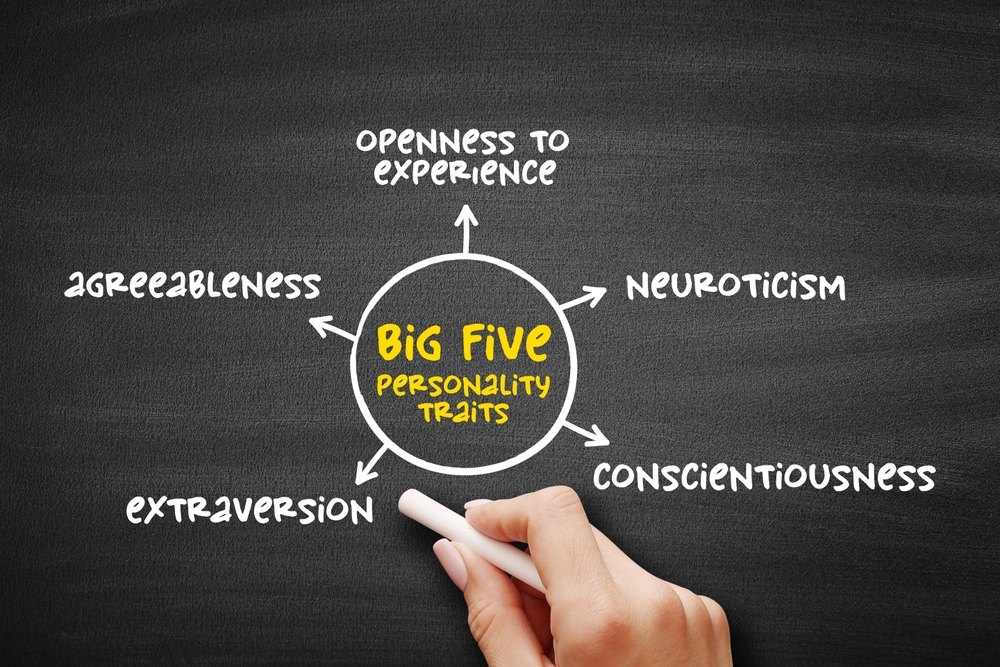
Psychologists usually measure personality using established frameworks such as the Big Five personality traits. This model evaluates traits like openness, conscientiousness, extraversion, agreeableness, and emotional stability. Accurately measuring these traits requires detailed questionnaires and statistical analysis. A single puzzle cannot capture the complexity of personality.
So why do people still find these interpretations convincing? One explanation is the Barnum effect. This phenomenon occurs when individuals believe vague statements apply specifically to them. Descriptions like “you sometimes rely on intuition but also like to analyze details” can apply to nearly everyone.
Because these statements feel personal, readers may accept them even when they lack scientific evidence. Rather than diagnosing personality, the puzzle simply highlights different thinking styles. Some people rely on instinct, while others prefer careful analysis. These differences reflect cognitive habits rather than moral character.
Why the Brain Falls for Visual Traps
One of the most interesting aspects of puzzles like this is how easily they trick the brain. Even highly observant individuals can miss important details. The reason lies in how the brain simplifies information. In everyday life, filtering visual information helps us function efficiently. Without this filtering system, the world would feel overwhelming.
However, puzzles exploit this natural tendency. The brain expects pipes to connect logically and liquid to flow along the most obvious path. Designers intentionally create misleading paths that appear correct but contain subtle blockages. As a result, the puzzle becomes a test of patience and attention. Those who slow down and examine each pipe carefully are more likely to notice the hidden barriers.
This process highlights an important lesson about perception. What we think we see is not always accurate. Our brains constantly interpret and simplify information, sometimes leading us to incorrect conclusions
What the Puzzle Really Reveals About Your Thinking

Although the puzzle cannot diagnose personality traits, it can reveal interesting aspects of how people approach problems. Some individuals rely heavily on intuition and answer quickly. Others analyze every detail before deciding. A third group combines both strategies by making an initial guess and then verifying it.
These approaches reflect flexible thinking styles rather than permanent personality traits. People may switch between them depending on the situation. In many ways, the puzzle serves as a reminder that careful observation often matters more than speed. By slowing down and checking assumptions, people can often uncover solutions that first impressions miss.
A Puzzle That Reveals More Than You Expect
The glass puzzle may appear simple, yet it highlights several aspects of human psychology. It shows how the brain balances intuition and analysis, how visual shortcuts can lead to mistakes, and why people often reach different conclusions when viewing the same image.
While viral posts sometimes claim that the puzzle reveals deep personality traits, the reality is more nuanced. Human behavior cannot be reduced to a single choice in a visual challenge.
However, the puzzle remains valuable for another reason. It encourages curiosity about how the brain works. By examining our thinking processes, we gain a better understanding of how perception, attention, and decision-making shape the way we interpret the world.
And sometimes, all it takes is a simple image to remind us that our minds are both remarkably powerful and surprisingly easy to fool.
Disclaimer: This content is intended for entertainment purposes only. Any quizzes, tests, or activities are not based on scientific evidence and should not be considered professional advice. Results are for fun and personal reflection only.
A.I. Disclaimer: This article was created with AI assistance and edited by a human for accuracy and clarity.
Read More: If You Had to Give Up One Comfort Forever, Which Would You Choose? Your Choice Says a Lot About You