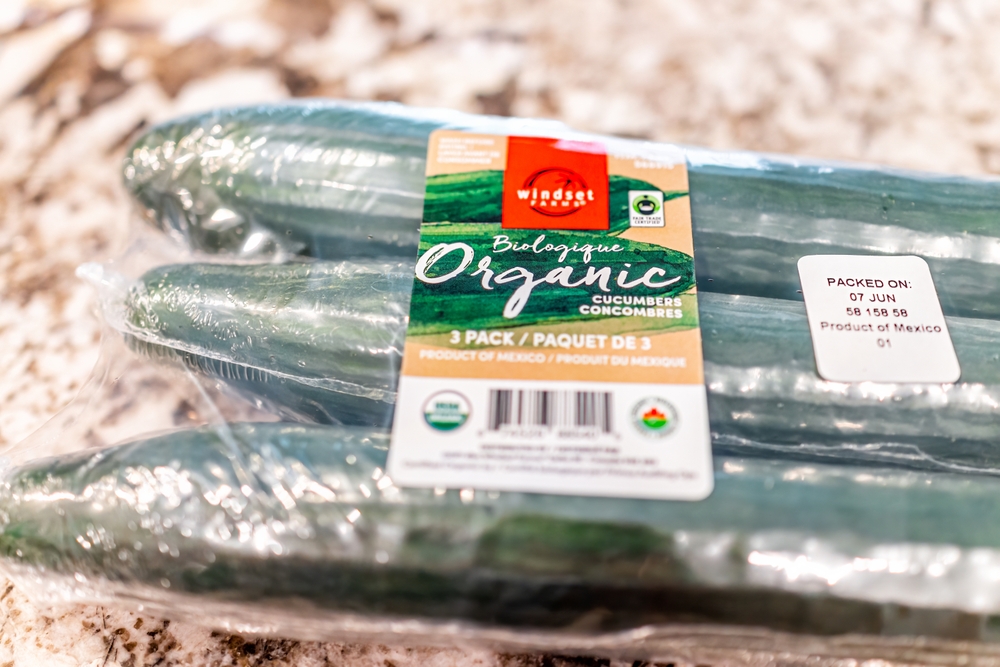

There’s a small, slightly absurd moment that happens in the produce aisle at least once a week. Someone picks up an English cucumber, peels back that tightly sealed plastic sleeve, and wonders – usually for a second before moving on – why on earth this one specific vegetable is dressed like it’s about to be shipped to the moon. Apples sit loose. Broccoli sits loose. The humble American cucumber sits loose in a big pile with all its friends. But the English cucumber? Individually wrapped. Every single time.
It’s not precious branding. It’s not a marketing gimmick designed to justify a higher price tag. The explanation is actually rooted in biology, post-harvest science, and a genuinely interesting tension between food waste and plastic waste that researchers are still working through. Once you know the reason, you’ll probably look at that plastic sleeve differently – and you’ll definitely store your cucumbers better when you get home.
The difference between an English cucumber and its American cousin is more than cosmetic. The English variety, also sold under the names hothouse cucumber, European cucumber, seedless cucumber, and burpless cucumber, is longer and narrower, with delicate ridged skin that’s noticeably thinner than the tough, waxy exterior of a standard American slicing cucumber. That tender skin is actually one of the reasons English cucumbers taste less bitter than other varieties – and the plastic is there in place of the wax coating you’d find on American slicing cucumbers. It’s a swap, not an addition.
The Skin Is the Whole Story
English cucumbers are wrapped in plastic because their skin is too thin to protect them from drying out. Unlike standard American cucumbers, which have a thick, tough skin that acts as a natural barrier, English cucumbers lose moisture rapidly once harvested. That shrink-wrap sleeve acts as an artificial skin, keeping the cucumber crisp and fresh during its journey from greenhouse to grocery store.
Regular slicing cucumbers don’t need that sleeve because they arrive with their own protection built in. Regular slicing cucumbers are typically coated with an edible wax to help protect them from damage and so they last longer. Waxing works well on American cucumbers because their thicker skin provides a sturdy base for the coating to adhere to. English cucumbers have such delicate skin that wax coatings can create an uneven, unappealing look and change the texture of the peel. Since one of the main selling points of English cucumbers is their pleasant, edible skin, applying wax would undermine the very quality people pay a premium for.
So the plastic isn’t extra. It’s doing the same job the wax does for the other variety – just for a cucumber that couldn’t tolerate the wax in the first place.
The thin peel can also make English cucumbers spoil more quickly, as they’re not as well equipped to keep water in and oxygen out. Wrapping them in plastic provides an extra layer of protection against these problems. Think of it like a phone screen without a case – perfectly functional, but one drop away from disaster. The plastic isn’t cosmetic protection; it’s structural.
What Happens Without It
A cucumber is 96 percent water, which it begins to lose as soon as it’s picked. After three days unwrapped, it has lost so much water that it becomes dull, limp, and unsellable. That’s a remarkably short window for something sitting on a grocery shelf that may have traveled hundreds of miles.
The plastic film extends an English cucumber’s shelf life by almost a full week. It protects from injuries that can let in agents of rot – bacteria, fungi, and fruit flies – while also locking in moisture and blocking out oxygen, a main culprit in accelerating decay.
The science bears that out clearly. Research has found that cucumbers wrapped in plastic have a shelf life almost three times longer than unwrapped cucumbers, due to reduced moisture loss. A peer-reviewed study published in Frontiers in Sustainable Food Systems examined the full supply chain of cucumbers and found that plastic wrapping is also a cold injury buffer – the principal advantages of shrink wrapping include reduced weight loss, minimized fruit deformation, reduced chilling injury, and reduced decay by preventing secondary infection.
That chilling injury detail matters more than people realize. Because cucumbers are sensitive to the cold, they actually keep better on the top shelf or the side doors of the fridge, which tend to be the warmest parts. The wrap slows the damage that comes from refrigerator temperatures that dip a little too cold – which is most refrigerators, most of the time.
The Environmental Math Is More Complicated Than It Looks
Here’s where the answer to this question gets genuinely surprising. The plastic wrapping on an English cucumber has become a flashpoint in the single-use plastics debate, and many shoppers assume it’s an obvious waste. The research tells a more complicated story.
For cucumbers transported from Spain and sold in Switzerland, a life cycle assessment found that the plastic wrapping accounts for only about 1 percent of the total environmental impact of the cucumber from grower to grocer. The more striking calculation: every cucumber that has to be thrown away has the same environmental impact as 93 plastic cucumber wraps. Plastic wrapping actually protects the environment more by saving cucumbers from spoilage than it harms the environment through the additional use of plastic.

When researchers compared the food waste prevented by wrapping against the environmental cost of the plastic itself, the benefit of wrapping was 4.9 times greater than the harm of the packaging.
That finding might feel counterintuitive, but it makes sense when you consider what goes into growing a greenhouse cucumber – the water, the energy to heat the facility, the fuel to ship it – before a single shopper touches it. Throwing that cucumber away because it went limp costs far more than the thin sleeve it came in. If you’re thinking about plastic and sustainability in your kitchen more broadly, the question of which kitchen items deserve scrutiny is worth considering for context on where material choices really matter.
The environmental calculus does shift for cucumbers grown and sold locally. In situations where cucumbers are sourced locally, the plastic wrapping can often successfully be omitted due to the shorter supply chain. The wrap is much more critical for imported cucumbers, which traverse a longer journey from farm to fork. That’s why you’ll sometimes find unwrapped English cucumbers at a farmers market where the grower is 20 miles away, but the same variety at a national chain will almost always be sealed up.
The Varieties That Get the Same Treatment
English cucumbers aren’t alone in needing this kind of packaging. English cucumbers are most often seen shrink-wrapped in plastic at the store, while Persian varieties are commonly found in small plastic containers or on a styrofoam platter covered in plastic. Their skin is markedly thinner than standard garden-style cucumbers, so they need extra protection as they make their journey from the field to the store.
Compare that to the more common American cucumber, which is shorter – typically six to nine inches long – thicker, and comes with a tough skin that’s often wax-coated to boost shelf life. The American variety is built for a rough journey. The English and Persian varieties simply aren’t.
English cucumbers don’t pickle well, either, because of how thin their skin is and how narrow they are. The same delicacy that makes them pleasant to eat raw and unpeeled makes them unsuitable for the high-acid brine of pickling. English cucumbers generally have a milder, sweeter flavor and are less bitter than regular cucumbers, partly due to their lower concentration of cucurbitacins – the compounds responsible for bitterness in cucumbers.
What’s Coming Next: The Plastic-Free Alternative
The produce industry has been working on an answer to the single-use plastic question for years, and the most visible result is a plant-based edible coating from Apeel Sciences. English cucumbers coated in Apeel do not require a plastic wrapper and last as long as those that do, removing thousands of pounds of plastic that would otherwise go into landfill. The coating is made from plant extracts – primarily lipids from agricultural by-products such as tomato skins and seeds – which self-assemble into structures that form an edible skin of consistent thickness, allowing the coating to independently keep moisture in and oxygen out.
In the conventional marketplace, Apeel is already being used on non-organic avocados, limes, English cucumbers, and apples. A 16-week trial across 56 retail stores found that by replacing the plastic wrap with the edible coating, the equivalent of 3.75 million plastic straws – or more than 190,000 plastic bottles – was eliminated.
A newer entrant is Akorn Technology, which launched its own edible coating specifically for English cucumbers and bell peppers in 2025. According to a report from Produce Grower, the company’s Natural Advantage coating forms a natural, invisible barrier that mimics the protective function of plastic, eliminating the need for single-use plastic on long English cucumbers while maintaining freshness and quality.
Consumer reaction to these coatings has been mixed. Some shoppers are enthusiastic about the reduced plastic. Others have raised questions about transparency and labeling – whether they can easily identify which produce has been coated and what exactly is in it. One concern raised by food advocates is the lack of requirement to list edible coatings on labels, meaning most coatings on organic and conventional fresh food go unlabeled. The argument is that consumers deserve the right to choose what they’re feeding their families and to avoid potential allergens. If that matters to you, checking with your specific grocery store about which produce they source with or without coatings is currently the most reliable approach.
Read More: These Moms Came Up With The Best Hacks You’ve Ever Seen
What to Do With This at Home
The plastic sleeve on your English cucumber isn’t just retail theater – it’s doing a specific, useful job. Leaving it on until you’re ready to eat is genuinely the better choice. The tight plastic wrapping helps cucumbers last longer in the fridge. It acts as both an insulator to protect against cold injury and prevents and slows dehydration and spoilage. Plastic-wrapped cucumbers typically last about 10 days in the refrigerator.
Once you cut into one, the clock starts moving faster. If you’ve thrown away the plastic packaging, wash your cucumber, pat it dry, and wrap it in a paper towel to absorb excess moisture. Then slip it into a partially open plastic bag to allow airflow and prevent sogginess. For a partially used cucumber, a cut English cucumber stored unwrapped will noticeably degrade in texture within one to two days. Wrapped snugly, you can extend that to four or five days before the cut end starts to turn translucent.
One more thing worth knowing: cucumbers react to ethylene gas given off by some fruits. If you store cucumbers next to apples, bananas, or ripe avocados, they can yellow faster and lose their fresh flavor. If your fridge has room, keep cucumbers in the crisper and keep ethylene-heavy fruit on a different shelf entirely.
The produce industry may eventually solve this with an edible spray, a compostable film, or some other innovation that doesn’t involve petroleum-based plastic. Until then, the wrap on your English cucumber is earning its keep. And now you know exactly why it’s there.
AI Disclaimer: This article was created with the assistance of AI tools and reviewed by a human editor.