

Aging is supposed to happen to you gradually, in the background, while you’re busy doing everything else. You expect the gray hair and the changing metabolism. You do not expect to look up one day in your sixties or seventies and realize that the room has gotten very quiet, that the calendar has thinned out in ways that aren’t about your own preference for quiet, and that the friendships you assumed were always going to be there somehow didn’t survive the last decade intact. Women aging alone and isolated rarely chose it in any direct sense. They made a thousand small, reasonable choices, and the cumulative result was not what any of them intended.
What psychology has come to understand about women aging alone is that the patterns tend to start decades before the isolation becomes visible. The behaviors aren’t character flaws, and they aren’t destiny in any fixed sense. They are coping strategies that outlived their usefulness, kept running on autopilot long after the original threat was gone. Recognizing them isn’t a diagnosis. It’s closer to finding a circuit breaker you didn’t know you had.
This is about the gap between what a woman thinks she wants and what her daily patterns are actually building toward – the behaviors that tend to widen that gap without her fully realizing it. Not the women who have chosen solitude deliberately and are genuinely thriving in it. That’s a different story entirely, and a valid one.
1. Treating Vulnerability as a Personal Failure
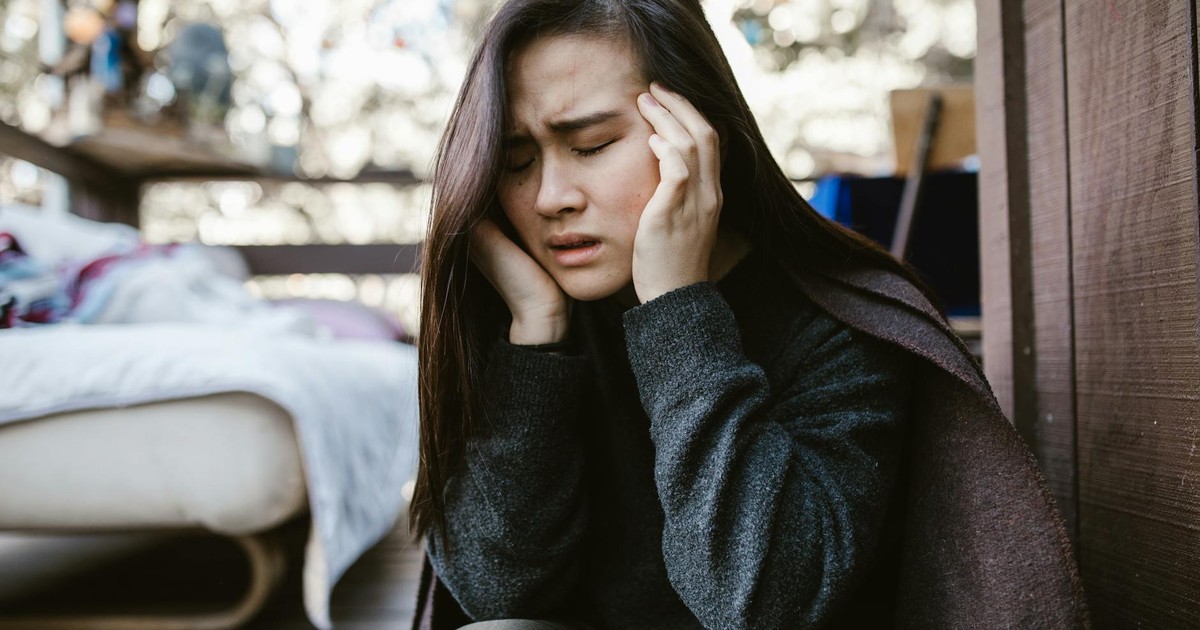
There is a certain kind of woman who has learned, usually through considerable experience, that needing people is risky. She has the receipts. She got through the hard thing alone, and then she got through the next hard thing alone, and somewhere in that process she concluded that needing people was not just unnecessary but genuinely weak. She wears her self-sufficiency the way other people wear armor.
The problem is that avoidant attachment – the pattern in which a person becomes deeply uncomfortable with emotional closeness and emotional dependence – tends to calcify rather than soften as the years pass. A 2025 study in Frontiers in Psychology found that women typically maintain larger and more diverse social networks than men but report greater psychological distress when those relationships feel emotionally inadequate. People with an avoidant attachment style often have difficulty forming and maintaining deep emotional connections, feel uncomfortable with intimacy, and strongly desire independence. This pattern typically develops from emotional rejection or neglect in early childhood, where avoidance and withdrawal became a strategy to protect against further pain. By the time a woman is in her fifties or sixties, that strategy can be so automated she doesn’t recognize it as a choice.
The cost arrives slowly. Friendships require a reciprocal exchange of need and care, and a woman who cannot receive care without feeling exposed starts to feel, at some level, like a burden to the people who try to offer it. She pre-empts them by not asking. They eventually stop offering. The relationship thins to pleasantries. She interprets this as confirmation that she was right all along about not needing people. The logic is airtight and completely wrong.
2. Refusing to Repair Relationships After Conflict

Every long relationship has ruptures. The question isn’t whether conflict will happen – it’s whether there is a mechanism for coming back from it. Women who grow old in isolation often have a pattern of letting ruptures become permanent, not out of malice but out of a combination of pride, pain avoidance, and a genuine belief that if someone hurt them, the relationship no longer deserves the effort of repair.
The gap between “I was hurt” and “this relationship is now over” is supposed to be filled with discomfort, some honest conversation, and a decision made with clear eyes. When that gap disappears, every significant hurt becomes a closed door. Over the course of a lifetime, that adds up. The friend who said the wrong thing at the wrong moment. The sibling who took the other side once during a family argument. The colleague who got the promotion. None of these, individually, read as catastrophic losses. Cumulatively, they hollow out a social world.
The added difficulty is that repair requires exactly what avoidant patterns make hard: admitting that the relationship matters enough to fight for. A woman who has spent years insisting she doesn’t need much from people will find it genuinely difficult to say, out loud, that losing someone would cost her something. Doing that requires the same vulnerability she has already decided she won’t offer.
3. Hyper-Independence That Has Calcified Into Isolation
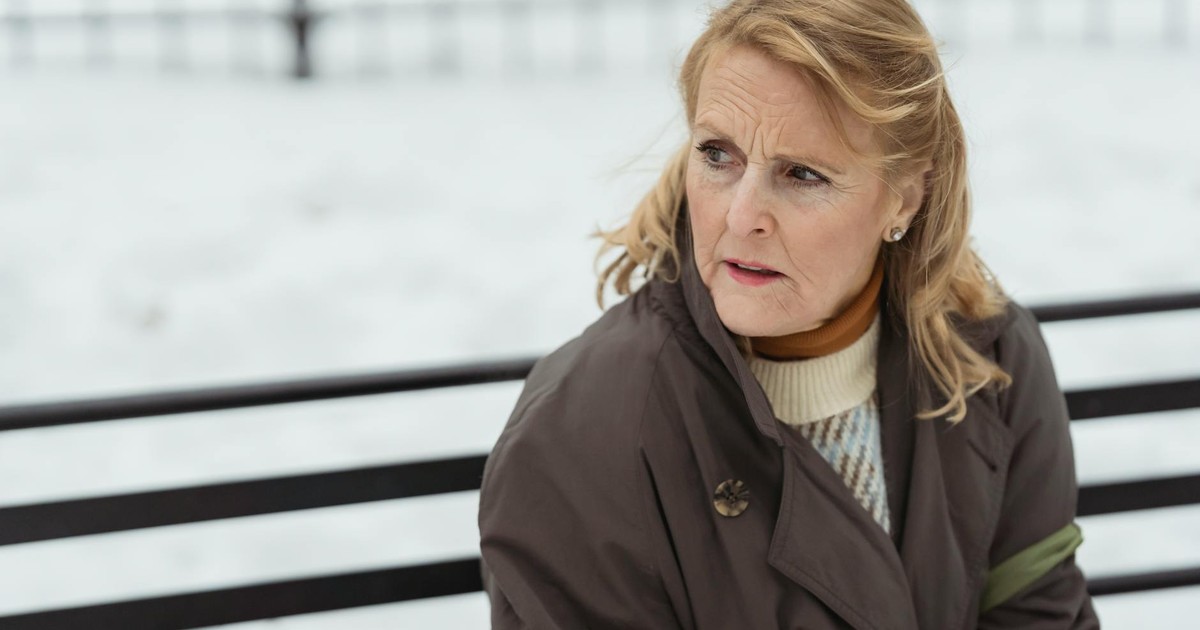
Independence is one of those qualities that starts as a strength and, when taken far enough without adjustment, ends as a wall. There is a meaningful difference between a woman who is capable and self-reliant and a woman who cannot ask for help without experiencing it as a kind of defeat. The second one is not actually more capable than the first. She is just doing more alone than she has to.
Hyper-independence is frequently intertwined with attachment avoidance, a pattern that reveals discomfort with closeness – often rooted in experiences of betrayal, neglect, or overwhelming responsibility in childhood, creating a deep fear of vulnerability. The woman who raised her kids largely alone, built her career without mentors, handled her health scares without leaning on her partner – she has real reasons to trust her own capability. But those same experiences can teach her that other people are unreliable, and that lesson, carried forward into her later years, becomes a self-fulfilling prophecy. People can feel when they’re not actually needed, and once that signal is clear enough, they stop making the effort to be present for someone who has made it plain she’ll manage without them.
The particularly insidious version of this is the woman who is fiercely independent about emotional labor. She’ll accept help moving furniture but not help processing grief. She will let her friend bring soup during a cold but will not pick up the phone during a panic attack. The emotional distance she maintains keeps her technically connected – she has friends, she has family – but the connections exist at a surface level that won’t hold weight when things get genuinely hard.
4. Using Chronic Busyness to Avoid Closeness

Busyness is the most socially acceptable form of emotional avoidance in existence. Nobody questions a woman who is always working, always scheduled, always on her way somewhere. The culture rewards it. She gets to be admired for her productivity while simultaneously never sitting still long enough for anyone to get close to her.
This pattern is different from a full life. A full life includes rest, intimacy, and the occasional afternoon with no particular agenda. Chronic busyness as emotional management looks like a calendar with no gaps, an inability to be spontaneous because spontaneous requires availability, and a persistent low-grade anxiety when things slow down, because slowing down means she might have to feel whatever she has been outrunning. The irony is that this kind of person is often surrounded by people and still fundamentally alone. Proximity is not connection.
By the time she reaches her sixties or seventies, the busyness often recedes on its own – retirement, health, circumstance. And what is waiting on the other side is not rest. It’s a social world that was never built deep enough to sustain her, because she was never around long enough for it to develop.
5. Maintaining Relationships Only on Her Own Terms

Some women age into isolation not because they push people away overtly but because they have quietly engineered their relationships to require very little of themselves. They are warm and generous when they feel like it, available when it suits them, and absent – without explanation – when it doesn’t. They are, in other words, wonderful friends on their own schedule and genuinely difficult friends to depend on.
Relationships that only function on one person’s terms are not actually relationships. They are performances of relationship, and the other people in them eventually notice. The women who sustain deep friendships into old age are, without exception, the ones who sometimes do things they don’t feel like doing – who attend the inconvenient wedding, answer the difficult phone call, make the trip even when they’re tired. Mutuality is not a personality trait. It’s a practice, and it requires occasionally putting someone else’s need ahead of your own preference.
There’s also the pattern of maintaining connection through wit, humor, and fun while avoiding anything heavier. She is the life of every gathering and has no one to call at 3 a.m. The loneliness that produces is specific and bewildering, because she can’t reconcile it with her seemingly full social calendar. But the calendar is full of entertainment, not intimacy.
6. An Unexamined Pattern of Distrust

Distrust, once established, is extraordinarily good at confirming itself. A woman who has decided that people are generally unreliable, selfish, or likely to leave will interpret neutral behavior as evidence and kind behavior as suspicious. She will find the catch in the generosity, notice the self-interest behind the favor, and file all of it away as proof. This is not paranoia, exactly. It is a cognitive pattern called confirmation bias, and it runs on autopilot without requiring any conscious decision on her part.
The origins are almost always legitimate. A significant betrayal – by a partner, a parent, a best friend – can rewire the way a person processes social information for years afterward. Trauma and neglect experienced at an early age can result in fear of intimacy and trust, further producing a state of hypervigilance. The hypervigilance was protective once. In a relationship that was genuinely unsafe, scanning constantly for warning signs was the sensible thing to do. The problem is that the brain doesn’t automatically recalibrate when the unsafe situation ends. It keeps scanning.
What happens across decades is that a woman with deep distrust becomes very hard to befriend in any lasting way, because genuine friendship requires both people to make themselves available to disappointment. She won’t do that. She will hold herself just far enough back that if anything goes wrong, she can say she knew it would. That distance, maintained consistently, becomes the very isolation she feared.
7. Letting Resentment Run Unaddressed for Years
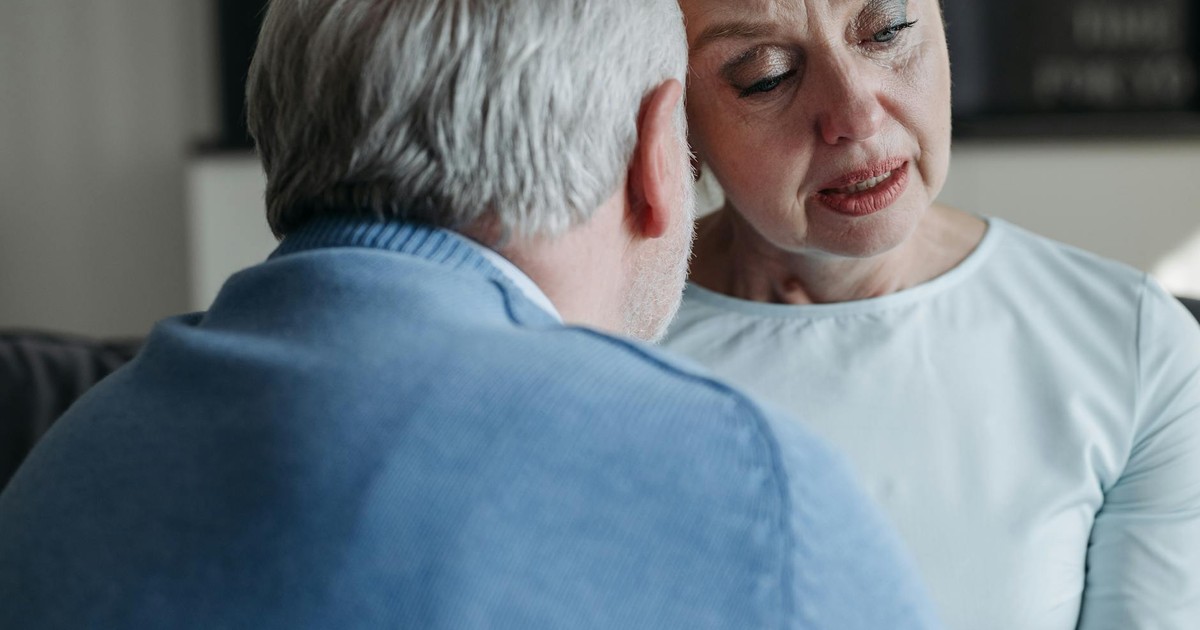
Resentment is carried weight. It doesn’t require active maintenance – it just sits there, quietly shaping how a person speaks, what she finds tolerable, and how much warmth she has available for the people in her immediate life. A woman who is carrying twenty years of unexpressed grievance toward her sister, her ex-husband, her mother, or a former friend is not, emotionally speaking, fully present in her current relationships. Part of her is always back in that kitchen, relitigating the argument that was never resolved.
This connects directly to what isolation does to the body. According to the National Institute on Aging, loneliness and social isolation are associated with higher risks for heart disease, depression, and cognitive decline. Chronic resentment is not just emotionally exhausting. It is a form of persistent stress, and persistent stress has a biological address. The toll it takes is not metaphorical.
The women who carry resentment longest tend to experience it as righteous rather than harmful, which is part of why it persists. They are right about what happened, which makes putting it down feel like a capitulation. But the resentment doesn’t hurt the person who caused it. It occupies the space where new connection could have grown.
8. Withdrawing From Life After a Major Loss
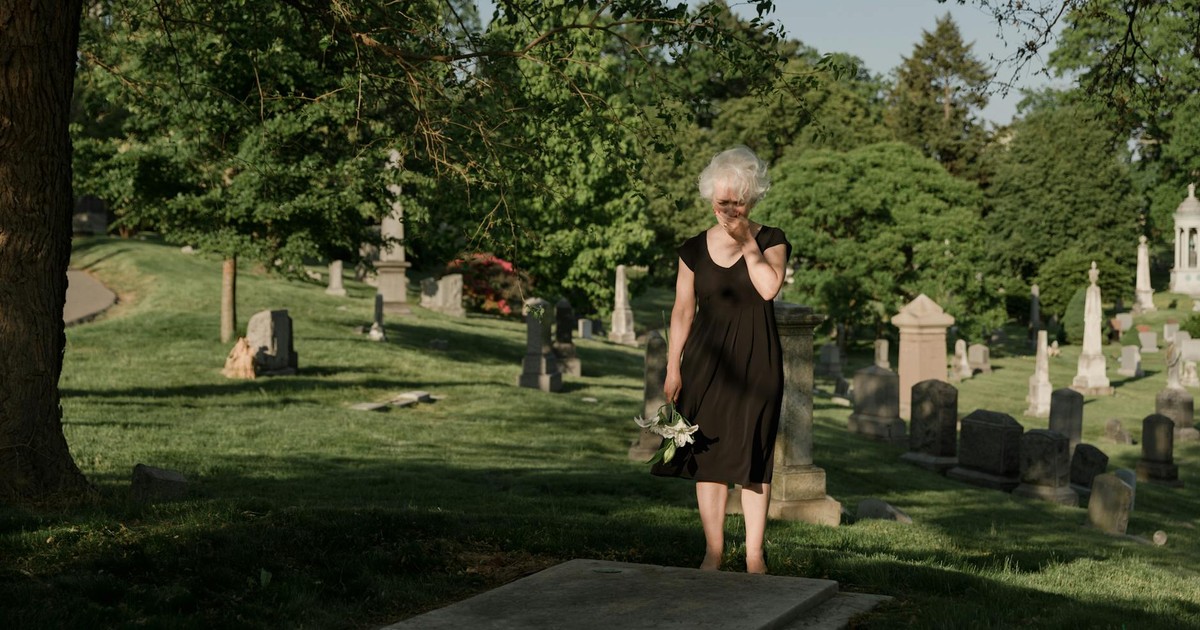
Loss is something every woman who lives long enough will face: a marriage, a friendship, a parent, a career, a version of herself she thought she would be. The loss itself is not the behavior. The behavior is the withdrawal that follows it, the slow or sudden retraction from social life, the canceling that becomes a habit, the letting-go of relationships that suddenly feel like too much effort to maintain.
Older adults face particular vulnerability to social isolation due to age-related transitions including retirement, health decline, mobility limitations, and bereavement. These life changes can disrupt established social networks and reduce opportunities for meaningful engagement. What research consistently finds is that this disruption is not a permanent state unless it becomes one through habit. The women who do not recover socially after major loss are generally those whose social world was already thinner than it appeared, or who, in the wake of grief, make choices – consciously or not – that make reconnection progressively harder.
Withdrawal after loss is human, expected, and appropriate for a period. The point at which it becomes a pattern is when the period extends indefinitely and the woman stops expecting to re-engage. She reorganizes her life around absence – fewer commitments, fewer relationships, fewer reasons to leave the house – and the reorganization starts to feel normal. The CDC reports that about 1 in 3 adults in the United States report feeling lonely, and research consistently shows that the pathway into chronic isolation is rarely one dramatic event. It is the slow habituation to less and less contact until less becomes the baseline.
Read More: 21 Reasons Why Older Women Are Now Saying They’d Rather Be Alone
What This Is Really About
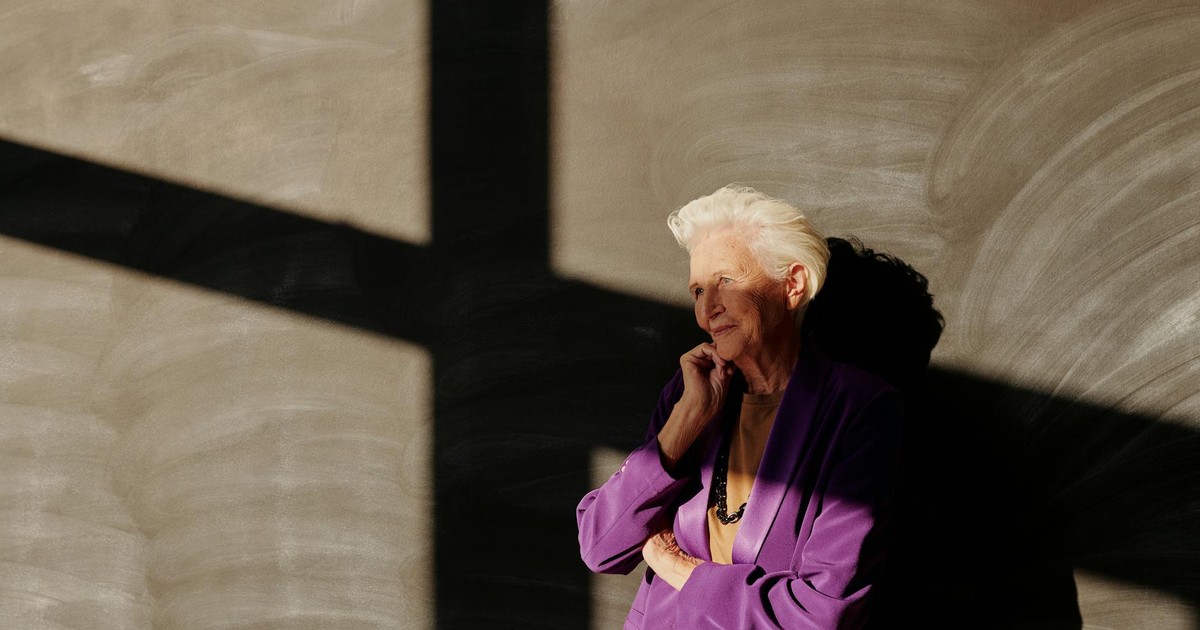
None of these eight behaviors are character verdicts. They are adaptations. Every single one of them started as a reasonable response to something real, and most of them worked, at some point, in some context. The woman who stopped trusting people had good reasons. The one who got fiercely independent was often the only person in the room who would do what needed doing. The one who withdrew after loss was simply trying to survive.
What psychology offers here is not a checklist of failures but a map of where the adaptations stopped serving the person they were designed to protect. The question to ask is not “am I destined to grow old alone?” because destiny is not the operating mechanism. The question is closer to: which of these patterns have I been running for so long that I’ve stopped noticing them? That question has a different kind of answer. According to research published in the APA Monitor on Psychology, lack of social connection heightens health risks as much as smoking 15 cigarettes a day – and that’s a 2019 finding, not a recent alarm bell. The patterns that lead to isolation are visible, which means they are also something a person can actually do something about, if she decides she wants to.
The women aging alone and isolated in their seventies and eighties are not a different species from the women in their forties and fifties reading this right now. They are, often, just women who never got the push to question what their coping strategies were building. Consider this the push.
AI Disclaimer: This article was created with the assistance of AI tools and reviewed by a human editor.