

Most women don’t broadcast their deepest wants. They hint at them, work around them, or quietly shelve them in favor of whatever the room needs right now. The desires in question aren’t scandalous. They aren’t even particularly complicated. They’re the kind of things that are obvious once someone names them but feel almost too vulnerable to say out loud, because saying them out loud means admitting that they haven’t been met.
The distance between what women want and what women ask for is not a character flaw. It’s the residue of being taught, from an early age, that the easy woman is the wanted woman. Keep the request reasonable. Don’t be a burden. Be grateful for what you have. By the time a woman is in her thirties or forties, many of those unspoken hopes have calcified into background noise: things she’s stopped expecting, not because they stopped mattering, but because voicing them started to feel like too much trouble.
This list is not about grand romantic gestures or impossible standards. It’s about the ordinary, legitimate, frequently suppressed things that actually move the needle for women in relationships, in families, and in life. Twelve of them. All real.
1. To Be Heard Without Being Fixed

The single most consistent complaint women have about the people who love them is this: they start talking and, within ninety seconds, receive a solution. Not comfort. Not acknowledgment. A five-step plan.
Deborah Tannen’s research, collected in her landmark book You Just Don’t Understand, found that men and women often use language differently in relationships: men tend to use language to solve problems and assert status, while women use it to build connection and find empathy. When a woman shares her frustrations, she often isn’t asking for a solution. She’s asking to be understood. Those are not the same request, and confusing the two is the source of an enormous amount of relational friction.
The desire to be heard, actually heard, without the conversation being redirected toward what she should do next, is one of womens unspoken desires that rarely gets aired because it sounds like complaining about someone trying to help. And she doesn’t want to sound ungrateful. So she stops bringing things up at all.
2. To Have the Mental Load Acknowledged

She remembers when the dentist appointment is, when the permission slip is due, when the car insurance renews, when her mother’s birthday falls, and what everyone in the house is out of. All of it runs in the background, continuously, whether or not anyone else is aware of it.
Research from the University of Bath and the University of Melbourne, published in the Journal of Marriage and Family, found that mothers overwhelmingly carry this “mental load,” the thinking work needed to keep family life running smoothly, while dads often take a back seat. Mothers handled 71% of household tasks that require mental effort, compared to 45% by fathers.
What women want is not necessarily for someone to take over the list. What they want is for someone to notice the list exists. One genuine “I don’t know how you keep track of all of this” would do more work than a dozen flowers. The acknowledgment is the thing. The invisibility of the labor is what wears people down.
3. To Want Things in Bed Without Performing Certainty About Them

Most women spend years figuring out what they actually like, and a significant portion of that time is spent pretending they already know, or pretending they don’t need anything they haven’t been offered. The whole cultural script around female desire is built around response rather than initiation, and it leaves a lot of actual desire unvoiced.
This one is layered. There’s the desire itself, and then there’s the desire to voice it without it becoming a whole conversation about why she didn’t say anything sooner, or a performance review of everything that came before. She wants to be able to say “I’d like this” and have it received with warmth, not a cross-examination. The freedom to want something specific, clearly, without having to manage the other person’s feelings about the fact that she has a preference: that’s the thing women rarely say they want, but almost universally do.
4. To Be Chosen Consistently, Not Just Initially

Being pursued at the beginning of a relationship and then gradually deprioritized is so common that most women have simply factored it in. The texts slow down. The plans become less creative. The attention that felt so deliberate in month two is, by year three, essentially absent. She adapts.
Bumble’s 2025 dating report found that 59% of women now place more value on stability and want a partner who feels emotionally consistent, reliable, and clear about life goals. That preference isn’t about a fear of excitement. It’s the exhaustion of being someone’s priority at the start and then watching that fade. Reliability looks like keeping your word and staying present when life gets messy, and for many women, that consistency feels deeply intimate because it removes the guesswork that quietly drains affection.
Being chosen again, on a Tuesday, for no reason, is the desire. Not because she doubts the relationship. But because being chosen is how love is made felt, and she’d like to feel it more than twice a year.
5. To Exist Outside of Her Roles

She is a mother, a partner, a daughter, a colleague, a caretaker. She has been in role for so long that sometimes she can’t remember what she likes when none of those jobs are active. Not what she should like, not what a woman her age is supposed to like, but what actually makes her feel like a person with a specific interior life.
The desire here is for space: not a spa day, not a glass of wine on the couch, but genuine unstructured time in which she is nobody’s anything. Time in which no one needs her input. A researcher at the Clayman Institute for Gender Research coined the term “mankeeping” to describe how many women in heterosexual relationships end up absorbing their partner’s social, emotional, and logistical needs on top of all their other responsibilities. The desire to simply opt out of all those roles for a while, without justifying it, is one women hold privately and rarely voice directly.
6. To Be Complimented on Something Other Than Her Appearance

She knows she looks nice. She’d also like someone to notice that she’s funny. That she’s smart in a very specific way, not “smart for a woman,” not “so organized,” but genuinely, interestingly, surprisingly good at things. That she reads situations other people miss. That she makes the room different when she’s in it.
The appetite for non-appearance-based recognition is one of womens unspoken desires that barely gets discussed because it can sound like fishing for compliments. But the distinction matters. “You look beautiful” is kind. “The way you handled that conversation was remarkable” is transforming. Women want to be seen in their full range, not just the version of themselves that’s easiest to compliment.
7. To Disagree Without Penalty

She has learned how to disagree in ways that minimize friction: softening her tone, adding “I might be wrong, but” before the thing she actually knows she’s right about, preemptively managing the other person’s reaction to her view before she’s even finished expressing it. This is not a personality trait. It’s an adaptation.
Tinder’s Year in Swipe 2025 found that 64% of young singles say dating needs more emotional honesty. That yearning points at something real: the exhaustion of performing agreement. Many women want relationships, workplaces, and family dynamics where a contrary opinion is received as information, not a provocation. The desire isn’t to be combative. It’s to be honest without having to budget for the fallout.
8. To Have Her Ambition Taken Seriously

She has goals. Not aspirations, actual, specific goals, with plans attached. And she has spent a meaningful amount of time softening them in conversation so the people around her don’t feel threatened or irrelevant by comparison. She minimizes. She frames her success as luck. She deflects.
The desire to have someone genuinely interested in where she is going, not supportive in an abstract cheerleader way, but actually invested in the specifics, asking real questions, tracking her progress, treating her career or creative work or intellectual pursuits as real and important, is not something most women ask for directly. Asking for that feels demanding. But the absence of it creates a specific kind of loneliness that’s hard to name.
9. To Receive Affection That Isn’t a Precursor to Something Else

Non-sexual physical affection is its own category of want, and it’s one that frequently collapses into a different conversation. A hug that ends in ten seconds. A hand held while watching something. A forehead kiss while she’s doing the dishes. Affection that says “I want to be near you” rather than “I want something from you.”
A 2021 study in Personality and Social Psychology Bulletin found that people who felt more understood and cared for by their partners tended to engage in more affectionate touch, and that this touch doesn’t just express love, it deepens it. Women often understand this intuitively and want more of it. What they don’t want is to have to explain the distinction. The request to be touched without it automatically becoming sexual is one that many women carry quietly for years in long-term relationships without saying it plainly, because saying it plainly feels like a criticism.
10. To Rest Without Accounting for It

She can quantify her productivity. She is not sure she can justify her exhaustion to everyone’s satisfaction. So she does not fully rest. She half-rests, scrolling while the laundry sits waiting, sitting down only to remember three things she forgot to do, because full, unapologetic unproductivity has never quite been extended to her in the way it has been extended to the men around her.
The desire is not complex: rest, real rest, without the preceding justification and without the follow-up accounting for what she accomplished while she was not resting. One afternoon, one weekend morning, one hour where her time is not owed to anyone. The fact that this has to be listed as a desire at all is its own kind of sentence.
11. To Talk About Something That Isn’t the Children
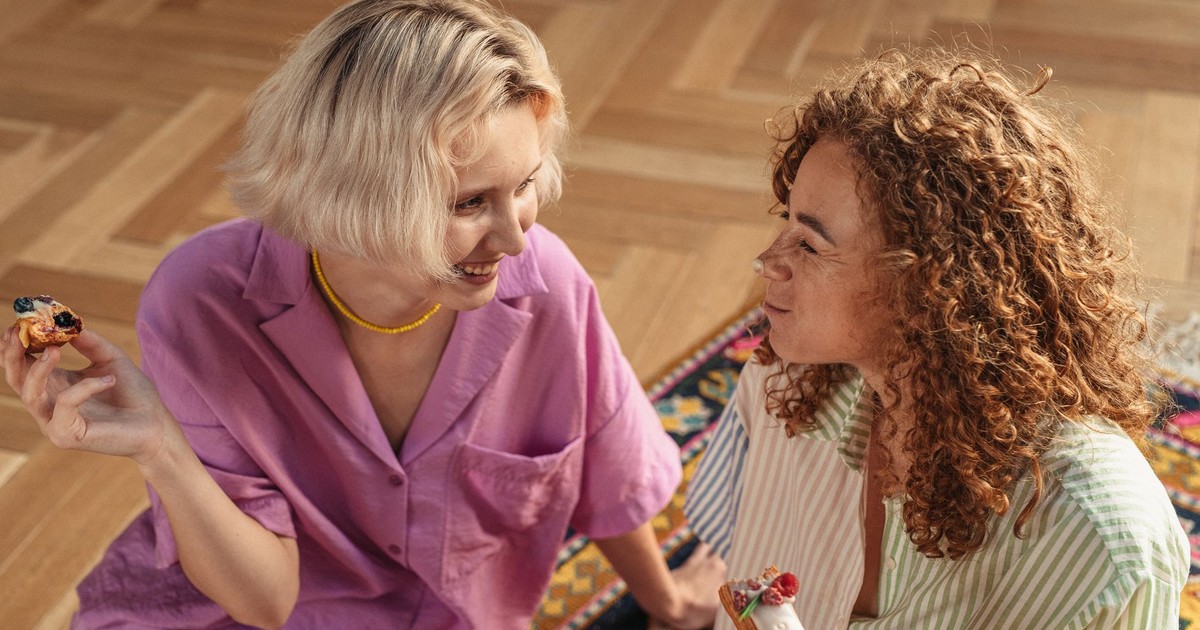
She loves her children. She also has a self that predates them and is not entirely reducible to them. She has opinions about things that have nothing to do with school schedules or developmental milestones. She has a perspective on things happening in the world. She has a favorite book from three years ago she’d like to talk about, and she cannot remember the last time anyone asked her what she’s been reading.
The hunger for conversation that engages the full version of her, not just the maternal version, not just the partner version, but the person who was interesting before anyone depended on her, is something women experience acutely and mention rarely, because it can sound like ingratitude for the life they have. It isn’t. It’s a desire to be known, which is a reasonable thing to want.
12. To Be Appreciated Without Having to Ask

Gratitude that has to be requested is not really gratitude. It is a task completed. And many women have spent years prompting the appreciation they need, asking “did you notice I did this?” or putting it into indirect language, or simply resigning themselves to the likelihood that nobody will say anything.
The desire is to matter without having to prove it. To have the contribution seen before she’s mentioned it. To come home to an acknowledgment that didn’t require a ten-minute lead-up discussion about the importance of feeling seen. Asking for appreciation, directly, is something most women find almost impossible. It too easily sounds like a complaint, like neediness, like not being grateful for what she has. So the desire sits there, unvoiced, in the distance between what she does and what is noticed.
Read More: 9 Habits of Couples Who Keep the Spark Alive
What Goes Unsaid

The through-line in all of these is not a demand for a different life. It’s a desire to be known more fully in the life she’s already in. To have the people around her see past the function she performs and into the person performing it. That’s not a complicated request. It’s just one most women have learned not to make, because somewhere along the way the cost of asking began to feel higher than the cost of going without.
None of these desires require another person to be perfect or endlessly attentive. Most of them require exactly one thing: noticing. The mental load is not about doing more. The appreciation is not about grand gestures. The compliments are not about frequency. It’s about whether the other person is actually paying attention, not because they’ve been prompted, but because she matters enough to warrant it.
These twelve desires have something else in common: none of them are outrageous. None of them are unreasonable. They are not the demands of a difficult woman or a dissatisfied one. They are the quiet inventory of a person who has been pouring out steadily and waiting, sometimes for years, for someone to notice the level dropping. Naming them is not a complaint. It’s a start.
Disclaimer: This information is not intended to be a substitute for professional medical advice, diagnosis, or treatment and is for information only. Always seek the advice of your physician or another qualified health provider with any questions about your medical condition and/or current medication. Do not disregard professional medical advice or delay seeking advice or treatment because of something you have read here.
AI Disclaimer: This article was created with the assistance of AI tools and reviewed by a human editor.